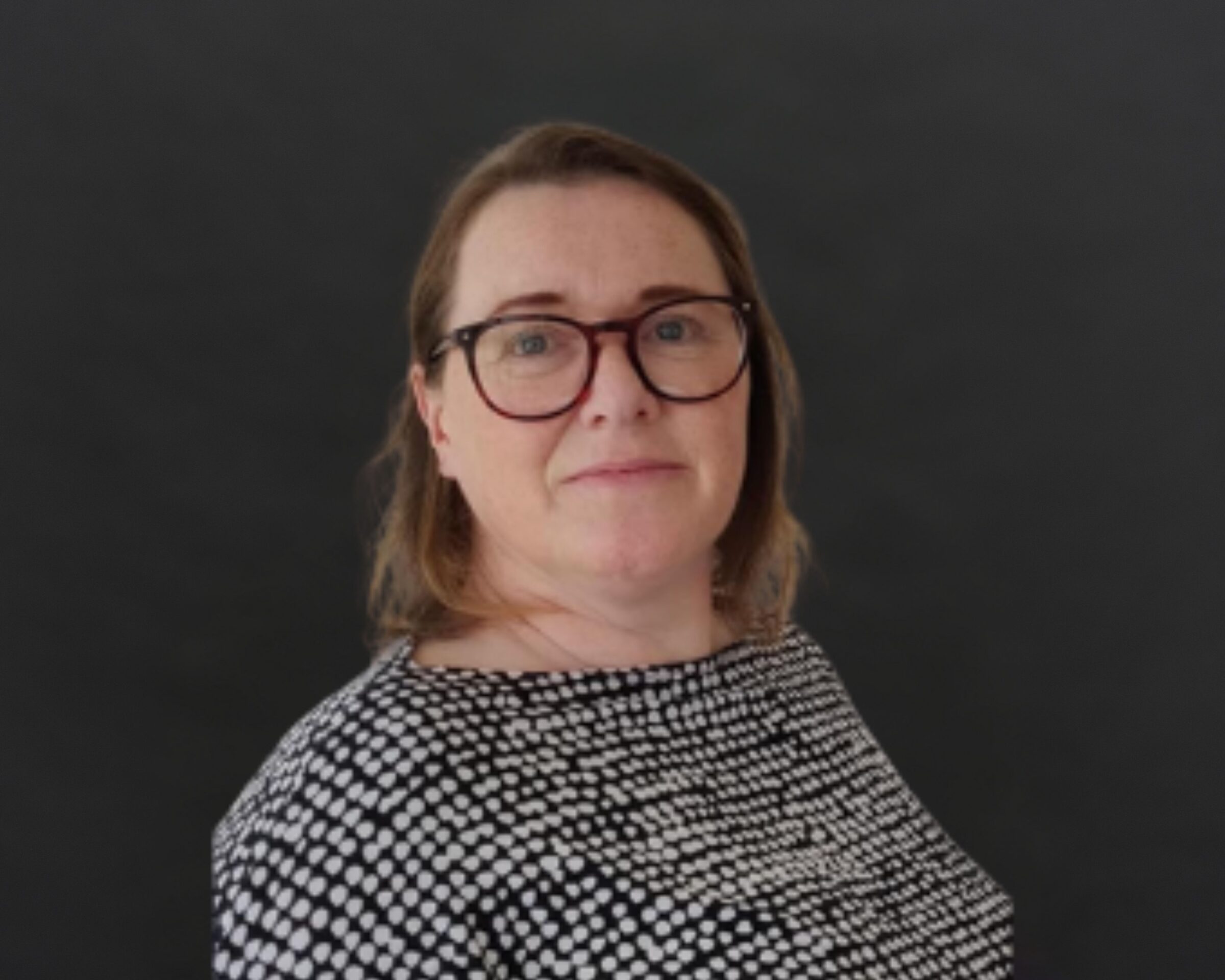

Hidden Hiring Costs with Dee Coakley
Managing a dispersed workforce often leads to unexpected regulatory friction and compliance risks.
Business owners frequently struggle to maintain legal standards when hiring talent across multiple international jurisdictions.
We explore how to bridge these gaps through robust infrastructure and smart employment strategies. This episode breaks down the complexities of international payroll, tax obligations and the role of the employer of record.
We are joined by Dee Coakley, CEO of Boundless. With deep operational expertise and a history of scaling high-growth tech companies, Dee shares the realities of building an award-winning platform that transforms how organizations manage remote international teams.
Things we spoke about
- Origin story of Boundless and global expansion.
- Legal obligations of hiring remote international workers.
- Why Irish payroll fails for international employees.
- How to select a co-founder with complementary skills.
- Strategic benefits of the Boundless and Payoneer acquisition.
Guest details
Dee Coakley is the co-founder and CEO of Boundless, an Irish-founded tech platform that enables companies to hire and manage international talent. A seasoned operational leader and former COO, Dee brings vast experience in finance, legal, and HR systems to the global workforce space. Under her leadership, Boundless successfully scaled to 32 countries and was acquired by the global financial technology giant, Payoneer.
Company Website – www.boundlesshq.com
Social Media: https://www.linkedin.com/in/deecoakley/
Transcription
For your convenience, we include an automated AI transcription.
Dee Coakley 0:02: We’re an employer of record. We support businesses with cross-border workers, and we handle their HR compliance, payroll, and benefits in territories where they don’t have entities or established infrastructure.
Voiceover 0:15: No unicorns, no brands, just hard-working people who built their business from the ground up, sharing their experience, so others can learn. Presented by Larissa Feeney from Kinore. This is Real Business Conversations.
Larissa Feeney 0:34: Building a global team is one of the most exciting ways to grow a business today, but unlocking that international talent requires a serious amount of compliance and clever infrastructure. Our guest today built a brilliant tech platform that makes cross-border hiring seamless, helping companies scale smoothly into new markets all over the world. It’s a pleasure to welcome the CEO of Boundless, Dee Coakley.
I’m really excited to talk to you, Dee. I have so much that I can ask you, and I know that our listeners would be really interested in the journey of Boundless and its recent acquisition. But before we go there, maybe start by telling us a little bit about you and how you came to set up Boundless in the first place.
Dee Coakley 1:18: Sure, so I have a pretty varied background, I would say I started my career in the music industry. I’d studied business studies in DCU and Dublin, and had a desire to work in the music industry. I was a big music fan, so I spent time working in record companies and in artist management here in Dublin, and also in London, and got great experience and exposure in that sector, but like a lot of people in the music industry, I left the year I turned 30. It’s really an industry for people in their 20s.
Larissa Feeney 1:52: It’s clearly like the ceiling.
Dee Coakley 1:53: It’s actually a real cliche that a lot of people leave at that point in their lives, and that was at this stage about 20 years ago now. I suppose I looked around and thought, well, where is the future? What’s interesting that’s happening in the world right now? And at that point in time, it was pretty evident to me that music was moving online and that there were big opportunities in the mobile sector, and we didn’t even call it the tech sector then, we called it digital or online.
I thought I would go and get a couple of years experience in the tech sector, and then probably move back to music with that experience, or build a music tech business myself. But the second I stepped into tech, I was very happy and felt this was the place for me, so I worked as a COO for 10 years in other people’s businesses, and always oversaw finance, legal, and HR in those roles, and really that was what led to me discovering and experiencing the problems that we now solve for our customers at Boundless.
Larissa Feeney 3:02: So what exactly is that problem that you identified in terms of a gap that you couldn’t solve as a COO of those businesses?
Dee Coakley 3:11: So very organically over time, I ended up with these internationally distributed teams. It wasn’t by design. Emily Cass, who became my co-founder of Boundless. She was actually my first ever internationally remote employee, so that was a nice circle. Yeah, I was with a business called a workforce management software business selling to the hospitality sector, and Emily was working with us. She was a software engineer, and she wanted to do a ski season in Chamonix in France, and promised us faithfully she’d just be gone for one ski season, but it proved extremely difficult to figure out how to solve these compliance challenges around employment and payroll at that time.
Now she ended up staying in France for about 10 years. She was very happy there. I can’t blame her for living in the Alps, but the business I moved to that subsequently after that is a company called Axonista, an interactive video technology company, and we ended up with a very distributed team, and it was there that I really was trying to figure out how to solve these problems, so I was looking for employment lawyers and accountants in France and Germany and Croatia, and I was trying to produce dual language employment agreements that, by necessity, needed to look very different to Irish employment agreements, but you know, I didn’t know what my obligations were as an employer in these other countries, and I just really struggled to find a good solution, and that was what started me on this path of trying to build that solution.
Larissa Feeney 4:46: Just so I’m clear, and for those that are listening, the reality is that if you have a team and they’re dispersed anywhere outside of Ireland and you’re an Irish company, you can’t automatically continue to pay Irish. Payroll, Irish PRSI, for that employee, because the reality is that wherever that person is resident is where the liability falls. Is that right?
Dee Coakley 5:10: Absolutely. The very crude analogy I always use is, if I’m on vacation in Spain and I commit a murder while I’m in Spain, you know everyone understands I will be tried under the Spanish courts of law. Yes, I might be resident in Ireland, that might be where my home is, where I pay taxes, but I committed that crime in Spain. And it is interesting that people don’t quite understand that, of course, that stretches to your obligations as an employer.
Once your worker is anywhere else in the world the laws of that territory apply while they’re performing work for you from that territory, and I regularly hear people say, but my tends to be accountants rather than lawyers. Lawyers won’t take a risk of trying to provide advice relation to another territory. People will regularly say, my Irish accountant has told me it’s fine to have this worker of mine in Germany on an Irish employment agreement, and my response is always, why would you take legal advice from your accountant?
There is an obligation to provide that worker with the employment entitlements that they’re entitled to under the law of the country that they are in which, then, means the agreement needs to be, you know, you could produce a contract, and you can write on it that it’s subject to the laws of Ireland, but that, you know, that’s not worth the paper it’s written on. The individual is an employee in the country they live in, they’re entitled to the rights of the country that they live in, and likewise, that if that person’s a taxpayer in that territory, if they’re tax resident in that territory, you as an employer always have an obligation in that territory, and unfortunately, feigning ignorance isn’t a defence. You do have to meet those obligations.
Larissa Feeney 6:53: So today, in 2026 we have several of the team that don’t work in Ireland, and today I still find it a minefield to understand what it is I need to do and what the team has to do, but for you as a CEO, was that 10 years ago, 15 years ago, it must have been practically impossible to figure it out.
Dee Coakley 7:15: It transpires, there were services businesses doing what we now do at Boundless, they weren’t tech platforms. They would send you a series of spreadsheets over the course of the month for you to complete on a country by country basis, and support was all over the phone, and so on. The model that we operate is called Employer of Record.
I can explain that a little more, but how long that’s been in existence, nobody’s quite sure people in the sector reckon since the 60s, certainly since the 70s, and it was mainly used by the oil and gas, actually NGOs, and to some extent what years ago would have been called FMCG companies, big consumer goods companies, companies with very deep pockets that were using these services, and it was then when I had the idea for Boundless, was 2018 and it’s hard to believe that it’s, it is that recently that having an internationally distributed workforce was becoming a much more widespread thing, particularly in the tech sector.
Larissa Feeney 8:18: So 2018 you decided to set up this company, and your background isn’t in tech development, so you came from the music industries into operations, essentially. So, business management. How did you go about building a tech platform to solve that problem?
Dee Coakley 8:34: No, I had spent 10 years in COO roles in B2B software businesses, so I, for 10 years I certainly had not been leading product or engineering in those businesses, but I was sitting next to it. Generally, the culture interview right at the end, I might meet with technical hires, engineering hires. No one was going to hire me as a product manager. I had relationships in that space, so that probably gave me a bit of a head start, but like everyone else outside of the tech sector, there was a time where this was all double Dutch to me, when I was coming in from the music industry, that was my introduction to technology and building tech products.
Larissa Feeney 9:17: So you had a goal and a vision of what you needed to do here, which was to create a seamless platform or seamless way for employers to employ whoever they needed to employ that wouldn’t tie the team up in knots trying to figure it all out. What was your first step? Dean must have been, I mean, I know you had a co-founder, did you only have one co-founder at one point?
Dee Coakley 9:37: I had two.Okay, for a fairly brief period of time had a third co-founder. I started on my own, and I was about six months in before those two co-founders joined me. At that stage, it was very much idea stage. I mean, that’s what I love about building businesses. I love to look back. I always think this was just a blank page.
Larissa Feeney 9:57: Yeah.
Dee Coakley 9:58: It was just a blank page and actually, while we were going through the process of selling the business, while we were working on the transaction, my phone surfaced up this memory, you know, your photo memories, and it was from December 2018 and I was in my bedroom alone, and I had whiteboard sheets, and I had stuck them up on a wardrobe, so it was a decent flat surface to work on, and I had sketched out my goals for this business idea I had, and very high level what milestones I thought I would need to deliver on, and I probably had year 135, something like that, probably started at where I wanted to end up, and I did actually say exit at year seven, that was down there. Now I’m not going to claim that as we were building the business, we were always, you know, very focused on that goal. Subconsciously, it probably was in there, and it was exactly year seven to the month.
Larissa Feeney 10:59: Wow, that’s amazing.
Dee Coakley 11:01: We completed on selling the business, so starting point literally a blank page ideation on my own. I heard someone say this, probably on a podcast years ago, and I do always say it to people with an idea or very early stage. Have a slide deck in that slide deck, set out the very high level bullet points of what your business plan is, your concept is of how you define the problem you’re solving, the solution, and what you think your high-level plan will be for, say, years 135, something like that. And then have that deck, and every single conversation you have with anyone about this business, you open up the deck after the conversation and you tweak.
For me, that is how I would take a business forward in the very early stages, and then, of course, you reach a point where you have to start talking to people, and I actually spoke on Friday at an event for very early stage women founders, and I did say you need to speak to about 40 or 50 people experiencing the problem you’re trying to solve, and ask them very open-ended questions. Don’t get on the call and say, “I’m building a business, this is what I’m building. Get on the call and say, “I know this is your role. What are your experiences of problem X? Tell me about, and ask them to describe the problem.
Pay very close attention to the language that they use. Ask them how they’re currently solving the problem, and what it feels like for them to experience this problem. And by the time you do that with 10 or 15 people, but you do need to go to 40 people, you should hopefully see some patterns around the language that they use, how they’re describing it, and yet you have to remember when we started Boundless, you know, I can describe what we do in a very crisp, clean way. Now we’re an employer of record, we support businesses with cross-border workers, and we handle their HR compliance, payroll, and benefits in territories where they don’t have entities or established infrastructure, nice and clean.
When I started, we didn’t invent the term employer of record, but I didn’t know that’s what it was called. That was not a widely known term at all. And back then, there was also a term called professional employer organisation, and the two were used interchangeably. I mean, there was no dictionary definition of what these things are, so it is through having these conversations that you refine your language about how you describe your business, and I think that process for any business really should be the foundation, but certainly for if you’re building a software product or some form of tech solution that’s the best starting point.
Larissa Feeney 13:44: That was great advice for them, because I mean, if where you came from, you understood the pain, but you still probably went out and spoke to there were more people, but some people don’t understand the pain as much as they should, or they have to understand that the product or service they’re building actually solves the problem that they’re trying to solve, right. Tell me about your decision to bring in a co-founder.
Dee Coakley 14:05: I was very clear from the outset that I didn’t want to do this alone. I’m a very social person. I am very collaborative. I really enjoy working with people. I had no desire to be the dictator at the top of the organisation, where mine was the only voice that mattered, and also, you know, the responsibility of being the sole decision maker, the risk, the risk that wasn’t something I wanted, and I know I perform best when I have great people around me to bounce things off.
So I was very actively looking for co-founders. Now, I was also very aware that that’s a very difficult decision to make. I had seen, because I’ve been involved in the tech community for a long time, attended a lot of events, I was very aware that it can be a very tricky relationship and co-founder relationship. Chips can go badly wrong, so I was very concerned about that, and about who I was working with.
Larissa Feeney 15:07: Obviously, you know, you’ve touched there how important it is to go on with your co-founder, and you know, trust them and respect them, and all of that. Did you intentionally look for an individual who had complementary skills to yours?
Dee Coakley 15:18: Yes, so yeah, it was very important to me to find a tech co-founder, although I’d worked in tech environments, you know, I was always going to need a CTO and or senior product person. Now, in the end, Emily, who was my co-founder through the whole journey, she ended up fulfilling both of those roles. Her background was engineering.
She really developed her product skills over time, and now has huge strengths in that area, and is very much leaning into AI product development now. So, you know, I picked the right co-founder there. That relationship worked out really well. Our working relationship has always been fantastic. We have worked together before, but we didn’t actually know each other very well.
Because we weren’t working on the same team, we worked in the same organisation, but not on the same team. So, there’s a period of time where you’re trying to get to know each other, understanding how you each communicate, learning how to disagree, you know, getting to know that person and understanding where their sensitive points are, how you conduct an argument or a disagreement, how you work through that, and it was probably a period, I’d say a year and a half to two years, where you’re figuring that stuff out. Fortunately, in our case, we were both extremely committed to making that relationship work, and to working through, and to understanding each other. So that’s worked out really, really well.
Larissa Feeney 16:48: And did you go to her, to Emily, and say, “Would you be my co-founder? or did she approach you? How did that happen? I think this is where founders sometimes struggles. How do I find my person?
Dee Coakley 17:00: So at the time I was very close to the person who was the CTO with the organisation Emily was working at, where I had previously been COO, and I was bouncing ideas I had off him. He and I had actually talked about maybe building a startup together, and he then decided that he had done a startup before, another startup wasn’t the path he wanted to go down. He’s taken a completely different direction in his life outside of tech startups, from when the idea for Boundless was a seed, he knew that I was working on this concept and I was talking it through with him, and around that time Emily handed in her notice at that company, and she had talked to him about what she wanted to do, so he said to each of us, “You guys need to talk to each other, but he didn’t tell me what she was thinking, didn’t tell her what I was working on, and we went for a coffee on her final day in that job.
She was back in Ireland to hand over her laptop, and I sat down with her and said, so what are you going to do, and she said, I don’t know, but I know that whatever I do next, I want to work with an internationally remote team where remote work is done really well with really great remote work practices, and I want to be someone that really spearheads that, and I’d love to build something that’s an enabler for people living the kind of life that I’ve lived over the last few years, so remember she was living up the mountains in Chamonix in France, going skiing in the mornings before work during the winter, mountain biking in the summer, and she had built this life for herself where she was able to live somewhere relatively remote, surrounded by lots of other people that were also working for companies in New York and London, and doing this really interesting work, but from quite a rural remote setting. So, she turned around to me, then, and said, “So, I hear you have a business idea, I know nothing about it. What’s your idea? And when I described what I was planning on building, we both felt, well, this is very serendipitous.
Larissa Feeney 19:03: It’s like faith, isn’t it? It’s just unbelievable. Yeah, yeah, wow. So, that was that, then, that she was your person, and you guys embarked on a journey together. So, maybe tell us then a little bit about that journey. You did go out to raise money quite early, did you?
Dee Coakley 19:17: Yeah, very early, and that was driven by the fact that I had raised money for startups previously, where I’ve been an employee, but I had led on fundraising, so I had a network. We could never have built this business without investment. In order for us to operate, maybe I’ll give a little bit of context. We act as the legal employer on our customers’ behalf in the country where their workers are based, and that then allows us to process payroll on their behalf, pay the workers, pay the local tax authorities, pay local benefits providers on their behalf, and that means a customer can roll up or roll down a workforce in a country.
Or overnight we generally only need sometimes we can set a worker up same day in some countries and some countries there’s a statutory obligation of a couple of weeks notice to the local authorities but it means that the customer does not need to have an entity in country they don’t have to have a bank account in country they don’t have to pay accountants or lawyers the fifth side of that is we have to do all of those things.
Larissa Feeney 20:22: Yes, and that’s just what I was going to say to give us an idea of scale. How many countries currently does Band Us operate in?
Dee Coakley 20:28: At the time we sold a business back in January, we were live in 32 countries, so we had entities the equivalent of a limited company in 32 countries. It is a regulated space in many of the countries that we operate in. It’s not in Ireland, interestingly, but it is in most other countries. So, we would hold a licence to operate locally, and many countries were audited relating to that licence. We have to have a bank account relationship with the local tax authorities, set up relationships with benefits providers, so all of that in some countries that can take up to three years to set up.
so it can be anywhere from a few months to, I mean, three years is quite an extreme end of the scale, you know. Somewhere like Italy is extremely slow and painful to set up. In most countries would take us somewhere between eight months to maybe 18 months, so we needed that time to do that setup, and we had to pay accountants and lawyers in all of these countries, so you have a setup cost in every country before you launch there, and you have complexity, so we were running consolidated group accounts. Our finance team were running consolidated group accounts across 32 countries every month.
Obviously, you have software costs associated with that. You need expertise on the team. We had to have our own in-house global payroll team with people with expertise in all of these countries. We were paying local employment lawyers and accountants for advice and support as needed, at times it was monthly retainers, so we did require financing to support all of that, and so we set about raising angel investment in the first instance, and we’ll try it, remember the different rounds that we raised money at, it’s funny at the time you think you’ll never forget these things, because it is so important at the time, but then time moves on, and your brain fills with what comes after that.
I think our first round was 1.2 million, I think, or maybe it was slightly smaller, maybe it was 750k and then we did 1.2 million, it was that, you know, we did two rounds quite close back to back, that were in that, at that kind of level, but ultimately, by the time we’d exited, we had raised a little over 5 million euro.Okay, we didn’t raise funding in our last couple of years, it was all raised prior to that. It became extremely difficult to raise investment in our space, because it was an extremely competitive space, and there were some players that raised huge sums of money, hundreds of millions. Okay, so that had an impact over availability of funding in our sector.
Larissa Feeney 23:12: Okay. Okay, so you needed this setup, and I understand. See, whenever you talk about the level of complexities there, I can only imagine how difficult that would be, because even to do it in Ireland is difficult, and that’s with us within an awareness of the systems to go into countries where you have no awareness and the language barrier.
Dee Coakley 23:30: I can tell you, it doesn’t get easier than Ireland. I always say Ireland, UK, Singapore, Estonia – they’re the easy countries, and everywhere else is an absolute nightmare. Wow, the Irish government have done a phenomenal job at making sure really is easy to do business here. There’s hardly anywhere else like it.
Larissa Feeney 23:52: Okay, amazing. And even though, and I, you know, I know you were building a tech platform as all this was going on, right? Because this side of the business, this set up, initial setup. There’s no technology that can do this for you. Dee, that was you and your team, probably on the road, certainly on the phone, and building relationships and trying to get these things over the line.
So, I can understand why money capital was needed to fund that initial couple of years, certainly maybe a bit more. And then you move on through the journey, and you’re building the business, you’re building the technology, you’re building the relationships, and you’re finding your customers. How are you finding your customers?
Dee Coakley 24:30: So, I mentioned earlier that during the concept validation phase, I would always recommend that people identify who you think your user is going to be. Think is the optimal word, because you might find that your thinking on that evolves over time. Find out who they are and reach out to as many as you can. Generally, people, people know people like them. So, in our case, we actually started talking to COOs, because I was a COO, and I assumed that was who our customer would be.
Actually, our customer. Is really the most senior HR people leader in an organisation, that’s almost always who we’re selling to, but every time I spoke to a COO was in the first instance, I was saying, if you just say to everyone, can you introduce me to two more people like you, and then I was talking to HR leaders and asking them to introduce me to two more. Now, when I was talking with these people, I was not selling to them, I was not describing a product and saying I’d love you to consider purchasing this product.
I was not saying that. I was saying I’m very early stage with an idea. I’d love to talk to you about how you experience this problem, but inevitably a portion of those people on those calls say I’m really interested in what you’re building. I’d love to talk to you when you’re further along. Those people become your customers, like this isn’t something that you can advertise for, d, like your product is in speed to be, you can’t, you know, put a Google ad up or engage with an influencer to sell this product.
Larissa Feeney 25:45: So it’s very much about building relationships, and the lead time, I would imagine, is quite long, you know, from first call to contract sign. Would that be right?
Dee Coakley 26:04: We do run Google ads. We run paid ads across a number of platforms. Google ads, LinkedIn ads, Reddit paid ads have been successful for us more recently. So certainly in B2B SaaS, people will use those channels to reach.
Larissa Feeney 26:20: Okay. Interesting. Yeah. Okay. Let me mean, our sector, so much cash has been pumped into our sector.
Dee Coakley 26:22: If you take a subway in New York, you will often see the subway wrapped with the brand rising from an employer of record, which is very hard to believe. Tells you a lot about venture capital funding, and that these, what is, you know, relatively speaking, when we consider the world and global marketplace, it’s a relatively niche product. Competitors of ours with deep pockets certainly use channels that would traditionally be used for consumer marketing, or beat more, or for the marketing.
We do reach people that way. In the early days, though, you don’t have the funding to do that, it’s really hard to compete without words, so it is about relationships, but we lent into content very good from almost day one, and if I was starting a B2B business again, I advise people to do this all the time, content does such heavy lifting for you, so we hired a full-time writer. She was employee number four, I think four or five. We didn’t hire her full time in the first instance. She was an independent contractor, doing a few days a week, but very quickly we brought her in as a full-time employee. That lady, Arena Jambajava, is now our director of growth. Obviously, roles are all evolving now that we’ve been acquired, but she led growth at Boundless right up until the acquisition.
So content very long form thought leadership pieces has always been the backbone of our marketing strategy. And then we take those pieces and we break them down, and we might produce webinars, presentations, talks. I give at conferences. We will take that concept or message and break it down into LinkedIn posts, and that’s generally how we’re reaching people. The second part of your question was about sales cycles. Our average sales cycle for a number of years, it was always two weeks. Oh, wow. Because we tend to talk to people, people might engage with our content, they might hear me speak at an event, they might hear me.
We’ve also done a lot of PR, so read something, a newspaper, or hear me talk on a podcast like this, and that might put us on their radar, and they might start looking at what we do, but generally the point in time they book in a call with us, they will have some kind of pressing need. Yeah, that makes sense. We’re all human, Larissa. Yeah, we do sales calls every day of the week, where people say, “Oh my god, I’ve been meaning to talk to you for three months, but now my worker is moving abroad the week after next, and I haven’t sorted this out.
Larissa Feeney 29:00: Yeah, or we have somebody starting a spin on Monday, you know, and yes, yeah, can you sort of say it?
Dee Coakley 29:08: Oh, completely, yeah, I get all the time. We get a call on a Thursday, someone says starting on Monday, yeah, yeah, get that a lot, or you know, final stages of interview processes tends to be the point at which we’ll actually close a sale, and then that customer might expand over time. They might have workers working as independent contractors that are not compliant, and they might say, ‘Look, we’ll actually convert these people into compliant employees now that we have this this solution.
Larissa Feeney 29:34: Yeah.
Dee Coakley 29:34: But, yeah, the sales cycles are not too long, and nowadays everyone is making decisions more slowly about spending money now, so we find now it’s, it’s about four weeks, it’s doubled.
Larissa Feeney 29:45
Okay, okay, those kind of lengths of time. Okay, that actually makes sense to me when I think about it, because even for us in Kenor, at the payroll department, it’s one of the areas where we find clients are always compliant, they’re. Always very quick to make sure we have their records to make sure that their liabilities are paid, and that’s because of the reputational damage of not doing it in the eyes of their employees, of course. Right, they want to make sure their teams are paid.
Dee Coakley 30:13: It is interesting that everyone thinks that way in terms of their home territory. Yes, those have the same respect for the authorities in other countries, but the authorities in those countries have an expectation that an employer, you know, and I think people in Ireland will inherently understand that if an employer is a client of the IDA, so if you’re Google or Meta or a much smaller equivalent, Irish business owners will expect that those companies will comply with Irish law, and they will pay their employer taxes in Ireland.
Larissa Feeney 30:47: Yeah, but you will meet a lot of Irish business owners with workers in other territories, and they say that’s what’s fine. Yeah, don’t worry about it, or they might deny all knowledge that the worker is even in the other territory.
Dee Coakley 31:00: I’m 40, you know, yeah, which, again, it’s not a defence, no, no, the obligation is on you as an employer to know where your worker is.
Larissa Feeney 31:07: Yeah, and this is where your content, your educational content comes into play, right, because you’ve been able to use that to educate people, which is fantastic, so you said earlier on that not necessarily that you had a vision or a plan, because Edmore wasn’t like that, it was sketched out in a whiteboard, you had put in year seven, you happened to sell in year seven, and I know you didn’t intentionally work towards that deadline or anything as you move through your journey, but can you talk to me about the decision to exit the business, or what made you guys think that then was the right time for you?
Dee Coakley 31:39: We were looking at a whole range of realities. I suppose I often say founders will really exit at the point in time that’s optimal for them personally, you know. That often becomes a driving force. Our business is in a space that’s very affected by geopolitical events, the job market, the success of our business is driven by the labour market, which, of course, is driven by the overall economy, and we had seen over a period of maybe two years before we exited, we have moved from a number of years where we found that sales prospects were not price sensitive or not very price sensitive in relation to our product.
We have always sold to customers that really care about compliance. They want a high quality solution, that was always where we’d come from, and people were prepared to pay for that. But then we entered an era, and I think everyone has found this, where sales prospects were a lot more price sensitive, and they were looking for a low cost solution, and we were losing sales more regularly to lower cost providers. The good news is, post acquisition, now we’re part of the Payoneer Group, we are in a position because we’re operating at a much larger scale, and we’ve now solved the problem of country reach, so we were 32 countries, we can now support customers with workers globally, and we can do that at a lower price point than we ever could before, so that lower price point was something we could not support at Boundless without being part of a larger pioneer is a publicly traded organisation. It’s a much larger organisation, so that was a challenge for us AI.
A lot of our customers were tech space or service businesses, so design agencies, media agencies, and we were seeing the people, and there is a rapid trend towards reducing workforce size, and we knew that as startups are coming up and growing, we’re very involved in the tech space. We know what conversations are happening with VCs and investors. The expectation on the investor side is that you can do a lot more and get a lot further with far fewer people now, of course, there are big question marks over cost of these AI tools now, but we were heading in a direction where we were looking at all of these companies having smaller workforces, so you know that did make us think, you know, what should our timing be here, and that was somewhat of a driving factor, and then we spoke with Payoneer, and it was clear that being part of this larger organisation with this global reach, Payoneer had acquired an Asian employer of record about 18 months before us.
They have deep expertise and teams in Asia and across the Middle East, and we just hadn’t cracked Asia or the Middle East, at all, they didn’t have strengths in Europe. They found that when they were trying to sell to sales prospects in Europe, they were just lacking that local knowledge and expertise that we had. So, us joining forces, and they had great strengths in North America as well. We, at that point, couldn’t support North America for our customers, so it just made sense. For us to join forces and come together, and now we’ve solved a lot of our, we went through our historic product roadmap, our product roadmap from early last year, we went through that a few days ago, and we realised for our customers we’ve ticked off a lot of these things we were hoping to build, or problems that we had in going through this acquisition, so it was the right step at that time.
Larissa Feeney 35:24: So, for your customers, you’ve managed to execute on the roadmap and provide features and countries and services that were not available before, whilst at the same time providing at a price point that’s more appealing and removing the risk of churn, I suppose, to lower price competitors. Yes, so for the customer, it certainly sounds like it was the right decision and a perfect fit, almost, for you guys personally. Then, for the founders, it obviously made sense for you guys as well, because there is a personal decision, as you rightly say, to this, isn’t there?
Dee Coakley 35:54: There is absolutely. Now, we were fortunate as co-founders, we were both very aligned in terms of stage of life and realities of our lives, we’re both single and don’t have children, obviously people with families that becomes a driver for point in time and what your goals and aspirations are, but we were very aligned in terms of personal goals, so for us collaboratively to make a decision we were completely aligned on the decision that this was the right point in time and this was the right partner and the right exit for us.
So happy to say that was straightforward in our case. I’m sure for lots of co-founding partnerships that’s a more difficult decision if you’re at different stages or want different things, and that goes back to the very start of your relationship, actually, because you were aligned from the very beginning, and not only were you aligned from the beginning at a high level, but you also put a lot of work into the relationship, as you’ve described, in the first year, 18 months or so, to make sure that you have strong foundations in place, and you are right, we see it all the time, where co-founders maybe aren’t at the same stage of life, or something changes within their life, and that can be difficult.
Larissa Feeney 36:42: There was a lot there that you worked hard. It sounds like it was on the surface, it sounds like it was lucky, but actually I think you guys worked really hard to make sure that your relationship was strong and obviously set out in a journey together, set your goals and work towards them. What’s next for you then? Are you enjoying your current role? You’re still with Boundless, yes, and you’re loving what you’re doing right now.
Dee Coakley 37:23: Absolutely, yeah. It’s opened up a whole new world for us, literally at Boundless. Now I’m focused on growing the EMEA business, so particularly in Europe for the workforce management side of Payoneer. Payoneer is a cross-border payments company, and funnily enough, I did always say I reckoned our acquirer could be a cross-border payments company. Workforce management is the side of the business that handles employer of record.
We can now also offer contractor management and agent of record, which is a form of solution for independent contractors. And then where people breach compliance thresholds and want or need to convert those independent contractors to employees we can of course support as an employer of record as well, so my role now quite public facing in many ways, so having conversations like this, speaking at events, I was at Global Payroll Congress in Nashville a couple of weeks ago, I was at a summit of employer of record leaders in Toronto.
Also, a couple of weeks ago, so getting out, meeting people, we’re hosting our own events through Boundless as well. We had a great event on the EU Pay Transparency Act last week here in Dublin, and we did that in London a couple of weeks before, so a lot of work in that area, also working with the North American and European sales teams to support them with how they sell employer of record, it’s quite a technical sell.
Okay, and working with the people leading partnerships for EMEA and North America as well to support them with securing the right partnerships to sell workforce management into clients around the world, so yeah, it’s really exciting.
Larissa Feeney 39:09: Sounds like a really exciting time for Boundless, and for all that you can bring to the customers that you have, and the customers that you will have, and even for you personally, it’s also sounds fantastic, because what an amazing achievement to have built a business, to have scaled it, to have exited it, and to remain with the business to see it through to its next stage, and to manage that process. Dee, thank you so much. I could talk to you all day. Your journey is absolutely fascinating, and I really appreciate you joining us today. Thank you, Larissa. Great to be here.
Voiceover 39:40: Thank you for listening to Real Business Conversations with Kinore. For more information on this episode, see the description area of this podcast or visit our website, kinore.com Remember to press follow on your podcast player now, so you’ll get a brand new episode every single month. This podcast is produced by dustpod.io for Kinore Finance and Business Services.