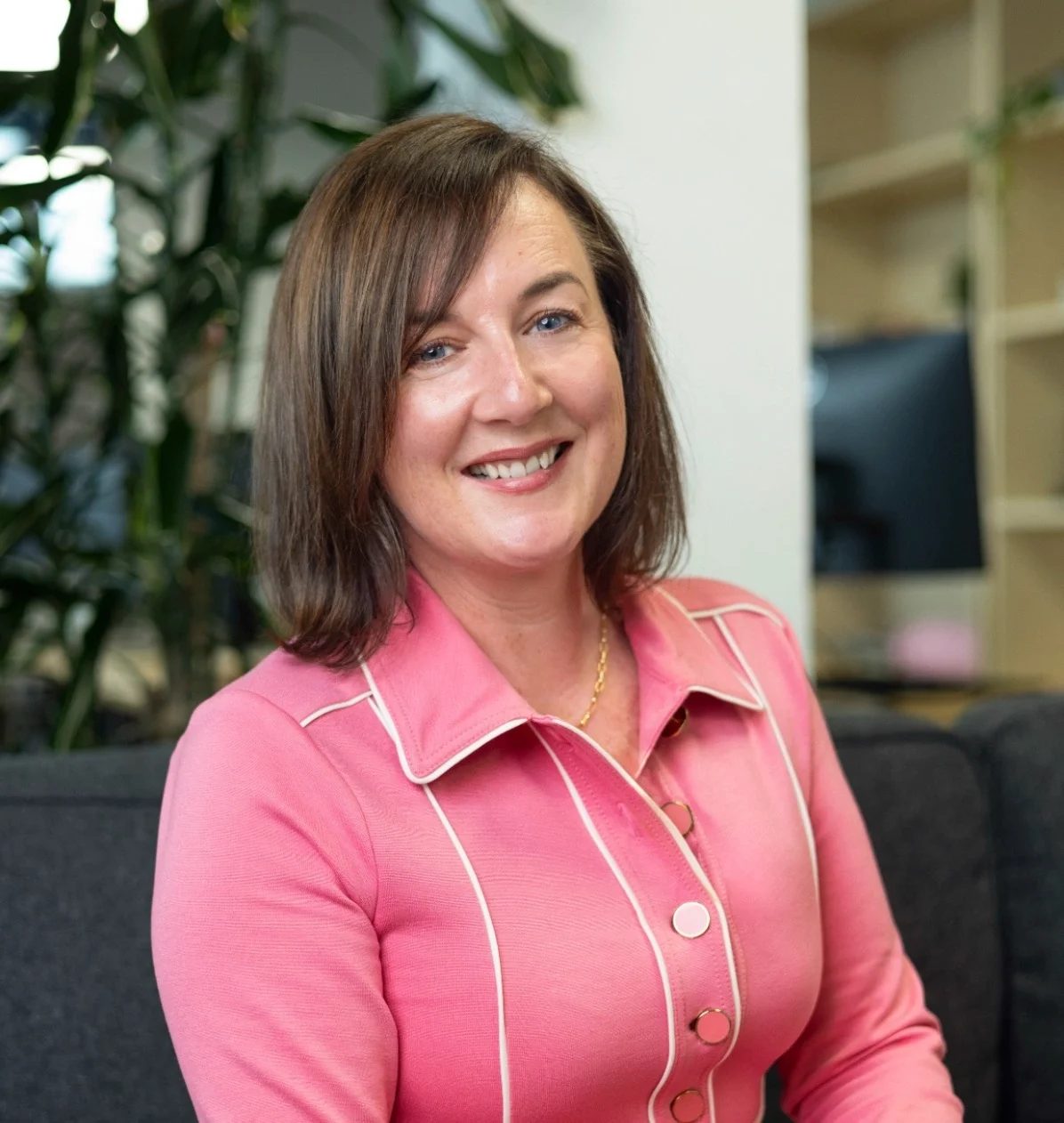

Commercial Acumen in Medtech with Brian Bailey
Bringing life-saving medical innovation to a regulated market is fraught with complexity, risk, and massive commercial barriers. The challenge is balancing technical perfection with the difficult business realities of scaling, fundraising, and exit planning.
This episode unpacks the journey of turning personal purpose into a profitable, high-impact medical technology business. We discuss the crucial differences between medical knowledge and commercial acumen, the importance of building trust, and securing investment in a slow-moving sector.
Larissa Feeney welcomes Brian Bailey, the CEO of Harmony Hybrid. Brian is a 25-year veteran of the medical technology sector who has successfully built, scaled, and exited multiple businesses in this demanding industry.
Things We Spoke About
- Commercial acumen harder than medical knowledge
- Build respect by knowing limits
- Prepare documents to minimise due diligence
- Creating products to avoid child heart surgery
- Need patience, perseverance, and right people
Guest Details
Brian Bailey is the CEO of Harmony Hybrid. He has over 25 years of experience in cardiology device distribution and sales in Ireland. Brian is an expert in commercial strategy and navigating regulated markets, having successfully sold his family business, Bailey Medical Limited, and his subsequent distribution company, Medilex Limited
Connect with Brian:
Company Website – https://harmonyhybrid.com
Podcast Transcription
For your convenience, we include an automated AI transcription.
Brian Bailey 0:00: I wasn’t medically trained, but I’d been around this business a long time. It’s an awful lot easier for people to learn the medical side than it is to learn the business side. The commercial side is an awful lot harder. I know we’re going to solve this problem for these kids and their families.
DustPod 0:15: No unicorns, no brands, just hard working people who built their business from the ground up, sharing their experience so others can learn. Presented by Larissa Feeney from Kinore. This is Real Business Conversations.
Larissa Feeney 0:36: On Real Business Conversations today, we are diving into the high stakes world of medical technology where the margin for error is zero. Our guest is a 25 year veteran of the sector who has built, scaled and exited businesses in one of the world’s most regulated industries. He’s here to share what it really takes to bring life saving innovation to the front lines of cardiology. It’s a pleasure to welcome the CEO of Harmony Hybrid, Brian Bailey, welcome Brian.
Brian Bailey 1:02: Thanks very much. Larissa, it’s lovely to be here.
Larissa Feeney 1:04: It’s lovely to have you and my goodness, I am really looking forward to this conversation. Brian, maybe you could start with, I suppose, give me a brief overview of your journey so far.
Brian Bailey 1:16: Yeah, well, I started in this business a long, long time ago, actually, when I was as soon as I could drive. We had a family business called Bailey medical when I was 17 over the summer, as I was doing deliveries and working in the warehouse. And really it started from there. My father was involved in the very early pacemaker implants back in the late 70s and early 80s. As an engineer, he would have gone in and on the technical side with the procedures when the very, very early days of pacemakers, and then you get into being a distributor for these pacemakers, and then into the world of stents and balloons for angioplasty that people know a lot about these days. So then, when I got involved, it was the family business. Worked my way through it. We exited that business in 2005 that was called Bailey medical. And then I set up another distribution business a few years later called medi Lex, which I sold in 2021 memory serves, yeah, 2021.
Larissa Feeney 2:07: So to go back, did you go to university? What did you study?
Brian Bailey 2:10: I just studied business. So I wasn’t medically trained, but I’d been around this business a long time. It’s an awful lot easier for people to learn the medical side than it is to learn the business side. The commercial side is an awful lot harder.
Larissa Feeney 2:22: That’s really fascinating, you because I actually say that about the industry I’m in too. You know, technically, you learn the technical regulations and rules and standards, but the commercial acumen, that’s not as easy.
Brian Bailey 2:35: No, that’s much, much harder. We would often have had the reps, which is what we all were really and still think that I am. You go out and you meet people and you’re introducing new products, and they see the nice clothes and the nice car, and sure, I’m having a great time sipping coffee, but they don’t see all the hard work that goes in behind it, and the stress and anxiety of the deadlines and the pressure of targets that are very different.
And so they come out of the medical side and say, why don’t we? I’d like to do that. I’ll apply for a medical rep job. It looks easy, but it ain’t, you know, it’s anything but and to learn the commercial aspect and to understand it that you need to make money to pay the bills, to pay your salary, and if you don’t, there’s no job.
Larissa Feeney 3:18: Brian, your story is amazing, and the passion you have, it really comes across in your story. Can you tell me how important it is for an entrepreneur to have passion?
Brian Bailey 3:29: It’s a great question. Larissa, because it’s vital, I think, because it’s the reason when you’ve got the rough days, the hard days, that you get up the next day and you go again, because if you didn’t have that, you wouldn’t bother. You know, you just wouldn’t bother. And for me, I know we’re going to solve this problem for these kids and their families and for their extended families, and this will last for 80 years of their life. This is not something that goes on for a few years. This is 80 plus years of benefit, and that’s an amazing legacy to be able to think you can leave behind.
Larissa Feeney 4:07: Yeah, I find that really fascinating. And I actually was talking about it at an event last week where the commercial and this is going to get more important. I suppose the bigger the role AI plays in our sectors, those that are more commercially aware will understand the realities of the world and the changes that we have to make to adapt. I would have assumed you had a medical background. So there we go. So you have a business background, and you applied commercial acumen to this sector, yeah.
Brian Bailey 4:35: So at the very start, when I started in the sales side, I was in my early 20s, you started the really basic products, you know, they’re really easy things, and you you learn your way through, you find your natural happy place, you know, as you do in most industries. And I really enjoyed interventional cardiology. Interventional Cardiology is quite complicated. It certainly was back then. You’ve got to think your way through problems. And so we. You’d be bringing in new products, and the doctors would need training on the new products.
So you’d often be in during the procedures to say, look, that’s you know, this one is the new product works a little bit differently, or does this, or doesn’t do that, whatever it is. And you would learn an awful lot by doing that, because you’d be in there seeing what they’re doing and seeing how they deal with these problems. And that’s how you learn, you know how these things are done, if you’re actually getting into those rooms.
Larissa Feeney 5:25: Is that where you hear what their problems are that allows you to develop solutions to those problems? Or how does that come about?
Brian Bailey 5:35: I’ve always had an entrepreneurial side, and enjoyed that side of especially again, going back to being in the car driving around, being that rep, you’re always thinking, and you’ve got time to yourself, you’ll be looking at solutions that that could have done better. We could have dealt with that situation and that patient a little better. And if we had that product, we could have done that, or whatever you see what’s going to be needed. And I sourced it. That was how I did it. Go to conferences and trade shows and see the new products before they’d hit the market, and try and bring them to the Irish market.
Larissa Feeney 6:03: But you must have had to build a lot of respect between yourself and the medical community in order for them to, you know, respect what you’re saying and to believe what you’re saying in terms of new innovations.
Brian Bailey 6:15: That’s very hard to do, actually, that is really true. I like to think I probably have a bit of that, and it’s probably, it’s just experience. And when you’re in that situation, you’re lucky enough to be allowed to go in to see some of these operations and bring a product in, the salesman stays outside, okay? And you go in and the only objective is to treat that patient the best way possible. Now that’s not the case for everybody. You know, there’s plenty of people who just want to sell products. If you approach it, I found early on, as long as you approach that as if it’s your own family member on the table, you’re respected.
The three most important words I ever, ever said were, I don’t know. You don’t make it up when you’re in that situation. And, you know, saying, I don’t know, also telling them when they should stop. Naturally, people have egos. They want to show that they can do this. And sometimes you need to say, No, I think you should stop here this. Maybe we take a pause. That level of respect is built over hard days, really. You know, training yourself, getting education at conferences, all that kind of stuff as well. But it is also about knowing when to say, I don’t know when to stop talking and when to leave.
Larissa Feeney 7:23: And you must have got some of it from your background with your dad. Must have come from there. Did it?
Brian Bailey 7:28: Yeah, it did. Well, actually, my dad died when I was very young. Oh, he was going into these procedures, as I say, doing the pacemakers, and he was going in five days a week. So say late 70s, early 80s. You’re using X rays to see where everything is going in the body. So they made a radiation he was exposed to was extremely high, and he died from cancer when I was 11.
And my mother, that was very young, yeah, well, it was, and it was all, you know, he just did a huge radiation exposure. So then what happened was my mom, who was actually a biochemist. She worked in Vincent’s, and she’d quit when I was very young, but she had a medical background. She actually grew that business. It was her that grew the business.
So she took the business that he had started in 1987 when you can imagine how many women were in business in 1987 in Ireland, yeah, she built that business from, I mean, a pretty it wasn’t small, but it wasn’t turned into one of the biggest cardiology distributors in Ireland. Wow, she did that, and then I came on board, I worked with her, and then we sold that in 2000 and or early, 2005 those kind of dates. And I went over to work with the new guys for a couple of years.
Larissa Feeney 8:42: And what triggered that first sale?
Brian Bailey 8:44: Well, it’s a good question. It was pretty simple in some respects, and very complicated in others. On the very simple level, it was just my mom was nearly 60. She’d given up a lot to bring up four kids on her own and running a successful business, yeah. And she decided she’d had enough, fair enough. I was still pretty young, and she said, Look, do you feel like you could run this business? And I said, No, not yet.
No, I didn’t want to be responsible for her income into her retirement, which I effectively would have been if I taken on the business at that point. Then we said, Right, okay, we need to sell it. And that’s when it, you know, gets more complicated, but we were acquired by a really good buyer. I worked, and they were very good to me. And then after I worked my non compete, I started again, working in that sort of niche cardiology space that I enjoyed, bringing really kind of cutting edge things to the market.
Larissa Feeney 9:37: That is the really mature decision, if you think about it, there would have been a huge amount of emotions attached to making that decision. I mean, not least your mum and her path, but also the roots of the business been started by your dad and him no longer with you. And then, you know, you’ve been mature enough at a very young age to make a decision like that, to say, as you put it, I don’t want to be responsible for my mum’s retired. Environment, which is completely the case, and that’s what would have happened.
Brian Bailey 10:11: So you allowed the business to be sold to secure her future, but without having the security in your own future, which was, yeah, fascinating, turned out to be the right decision, because the wave of acquisitions came about 18 months or two years later, and our biggest supplier got acquired by an even bigger these are all US corporates.
Yeah, I know they didn’t disappear overnight or anything like that, but that would have been a huge blow, that she would have had to deal with her. I wouldn’t have had the experience. So it turned out, I learned a lot from the new owners and working with them, and then when I set up again, I was more confident in what I was doing.
Larissa Feeney 10:40: Tell us about that. That would have been medilix. That was around 2000 and 1007 Okay, two years later, you decided to start again. What made you make that decision?
Brian Bailey 10:50: Well, I always wanted to. I didn’t particularly relish the thought of just working for somebody else forever. And also I did the products that I liked to do, I like to get? They required a different level of service and going in, and I didn’t want to be just, you know, selling the same old, same old.
So that’s where it came from. I was probably wanting to, you know, do what my dad did, and all those kind of things as well. I don’t know, but it was actually tough. It was an interesting time to start, because was just before everything really went sideways from the economy’s point of view. So actually, it stood me well during that period, because I had to be very lean.
Larissa Feeney 11:24: You must have started off just before the economy turned so you probably had very high aspirations at the beginning, given where the world was at and were, and then it went, Yeah, let’s go for survival. Yeah, interesting. Okay, and you hadn’t probably established yourself.
You hadn’t built up a huge amount of overheads, for example, that you would have had to cut back massively. Cut back massively, but the same time, you would have had to be incredibly lean.
Brian Bailey 11:45: Yeah. I mean, that’s both good and bad, as I’ve learned over the years. I’m sure you have too. It’s great to be able to do that. And when we started harmony, we were lean, and we bootstrapped, and all those words. But in actual fact, you need to surround yourself with the right people, yeah, if you want to scale it and grow it, and that’s something that can be hard for entrepreneurs to do.
Larissa Feeney 12:03: It can be can’t it? And we say it all the time, you have to surround yourself with the best people, but then you actually have to let them get on with doing the job as well as them been around you. Yeah, and you can’t micromanage them. Do you do that? Well, that’s good question.
Brian Bailey 12:14: I don’t know. I do my best. I don’t think I used to. I think I’m better at it now. And the people that I have around me, I’ve the people that I know quite a long time now. There’s a lot of trust between our group. And I really hope we build a culture that the business can be there in the future, when we’re, you know, retired, or whatever we’re doing in a couple years time. And I think that’s the core people who start the business.
They really add value to the culture. They’re the foundation of the culture for a long time. So to pick the right people, trying to delegate properly, giving people that entrepreneurial space for them to come up with ideas and not to limit them, those are all the things. But I don’t know if I do it well or not. I do my best.
Larissa Feeney 12:56: I think you’ve raised actually, an interesting point there, because you mentioned trust in the same sentence as delegation, right? And I had a conversation earlier today about this topic, actually, and we were talking about delegating, and perhaps failure to delegate, and why we would fail to delegate, and that’s why, isn’t it, sometimes we don’t trust that it’s going to be done, or done as well, or done to our standard, or whatever the case might be. So having that foundation of trust first and foremost, without that, I suppose the delegation is going to fail.
Brian Bailey 13:25: Well, it’s useless. So, yeah, I’d rather have nobody in a role than someone I didn’t trust. And that’s just the way it is, and it is hard to get we’re not quite at the stage where we need lots of people, yet we’re still scaling up. We’ve still a ways to go before we’re in market, but we’re already looking at employing certain number of people, and it’s hard to get them, you know, the right people at the moment. And then when you look at the use of AI as well, and how to integrate that, it’s, you know, there’s a lot there, yeah, there’s a lot there.
Larissa Feeney 13:51: There’s a lot to unpack. If I take you back to metallics for a moment, you grew that business over several years and ultimately sold it was in 2021 Yeah, before I ask you about the decision to exit the growth journey of that business, can you talk maybe about the lessons that you learned? Because it wasn’t quick, it wasn’t a couple of years of, I suppose, aggressive growth and then an exit. It was a stable, long term business.
Brian Bailey 14:15: Again, goes back to probably when I started. It was so lean and I wanted to keep it like that, I was slightly allergic to taking long term commitments. And also the distribution model. The way it works in the medical device business is that you usually get an exclusive distribution right for a country, nice somebody is the distributor in Ireland, somebody in England, somebody France, whatever. But as I mentioned earlier, the risk is that if you sign a contract with company A tomorrow, and then Medtronic buy them in the morning.
They’re gone. The contract’s gone, is it? It’s not gone, but they pay you off. I mean, they pay you off, but it’s it’s nothing, you know, okay, you’d much rather have the ongoing business. So there was that uncertainty always in the distribution model that made me a little bit uneasy. That was one of. Other drivers for me to go, right? Well, I want to do something myself, but in terms of growing that business, and it also got to the point during covid, I think as well, you realised, you know, what value am I adding here some of the time, you know, there’s other things to do.
Larissa Feeney 15:14: You thought you could add more to the world in another role, absolutely.
Brian Bailey 15:18: Yeah, okay, yeah. And also, your kids are getting your grown up, and you’ve got to spend time with them. You know, there’s no point just work, work, work. I think you’ve got to have balance in order to do your work properly.
Larissa Feeney 15:29: And did you find it difficult to get that balance whenever you ran that company? You did okay.
Brian Bailey 15:34: I mean, it wasn’t impossible, but you could get calls on a Sunday evening saying, Oh, we have a case tomorrow morning at 730 in one of the hospitals in the middle of Dublin, yeah. And so they go, we don’t have this stent or that balloon or that whatever. Can you bring it into us?
Because they knew I would right, and you’re not going to say, no, no, of course, you’re not. But that’s because they trust you. It goes back to trust. And if mean, I had calls on Christmas Day. I had calls on summer holidays, Easter holidays, every sort of day, and you just go, Okay, if I can do it, I will, okay, okay, I get it.
Larissa Feeney 16:07: I understand now, because that’s hard. You got to the point where you decided, all right, there has to be more to life than this. Now, that was a long journey. I mean, it was, what, 1015, years or so, yeah. Well, yeah. So long journey. Soyou got to the stage, and you thought, right, okay, the business is at the stage now where it’s ready to be sold, and I’m ready for it to be sold. How did you go about it? I think our listeners would be interested to understand you come to the conclusion. And then did you go looking for a buyer?
Brian Bailey 16:37: I got approached first by a UK buyer. Okay, and I think that probably would have worked out, but the CEO of that business, who’s actually a good friend of mine, now had a loss in his family, like, a week or two after that conversation, and it just fizzled out. You know, it was one of those timing things and then, but I’d already been in touch with my good lawyer, Colin Sainsbury, and Colin said, Hold on, I might know somebody.
And he made one or two phone calls, and before I knew it, there was David O’Keefe, who’s an Irish entrepreneur, very successful and been in medtech for a long time. He and I did a deal fairly quickly. The deal was done very quickly. The paperwork now, on the other hand, due diligence, the due diligence, dd, it was just all the back and forth from a legal point of view. Okay, but we got there, and I couldn’t have been happier. I have to say, it was great to get out, take a bit of time, travel, a bit that kind of stuff.
Larissa Feeney 17:29: Brian, you talked about due diligence therapy. You talked about how difficult it was. Would you have any advice for an entrepreneur who was earlier on in their journey, if they did have an eye on a sale, or indeed, if you know they didn’t, but they were looking to grow a business. What should they be doing now to prevent or to minimise the due diligence pain?
Brian Bailey 17:47: It’s a great question, because I think that’s something that people miss, and particularly when you’re going at 100 miles an hour trying to pay the bills this month and this week. Even, what I learned with that was when we started the journey with harmony medical, I was somewhat fanatical about getting all the pieces of paper in place, filed the right way, leave as many of them as I can with the solicitors.
You know, have everything ready, filed every i dotted and T crossed. It’s a pain. It’s not my natural skill either, but it’s just really, really important. It just reduces, it removes any questions when you’re going through the DD. It just removes needless questions and wastes of time and cost. I mean, solicitors are expensive, yeah.
Larissa Feeney 18:36: And how big was the team?
Brian Bailey 18:39: Whenever you saw the business, no small, really. It was just still me. I had a guy working on accounts in the office warehouse, guy that was about it, yeah, small team, small team. But it was a very profitable business. I’d come to the conclusion I was limiting it myself. I was the limiting factor, you know, because it got stuck in that road of being a bit risk averse, probably in terms of who I take on. I tried to get road reps. It was just really, really hard as a small player.
Larissa Feeney 19:05: Okay, so in order to grow the business, you would have had good, decent reps on the road. Yeah? You were really limited, because you were the only salesperson. Is that, right?
Brian Bailey 19:12: Yeah, more or less, yeah, yeah. I use a few agency reps and things like that. But that it’s not the same.
Larissa Feeney 19:18: Yeah, not the same. So tell me whenever you were looking to sell the business and the buyer was, did you say David O’Keefe, yeah. Did he essentially buy your book of business?
Brian Bailey 19:32: Your contracts that essentially what the business was, yeah, effectively it was all your contracts with suppliers, because those are other than there being an acquisition, which did happen, as I said, those contracts are for several years. They’re exclusive. They’re long term profitable and profitable. I mean, it can be a profitable business, but it’s a high cost business, as well as high cost model to run that level of service. But that’s what people expect.
Larissa Feeney 19:52: Yeah, okay, that’s fascinating, then for him. Then if it’s a nice bolt on for his own business, if he’s in the sector, it probably is. Something that could be integrated quite seamlessly, I would imagine, to a similar business.
Brian Bailey 20:04: Exactly. That was exactly why, and that’s what happened.
Larissa Feeney 20:07: Yeah, so you had done all the hard work in terms of building up the business over several years and building those relationships, Brian, on the subject of selling a business the size that that was, so that was essentially not a one man band, but not too far away. You were the main guy there, right? I’m interested in that, because what I do hear a lot in you know, whenever individuals are trying to grow a business, they feel as if they have to scale.
I hear that word a lot. I have to scale in order to create value, to make it sellable. And the narrative being that, if you are the only person in the business, or one of a couple of people in the business, you’ve essentially created a job for yourself rather than growing a business that’s sellable. And yet, you have managed to sell a business essentially with you in it and a couple of others. So how did you do that? How did you manage to create a business that had value and that wasn’t overly reliant on you, even though you were the main man in it?
Brian Bailey 21:03: Well, it’s not a simple question to answer. I think the business probably was over reliant on me, but what I did have were the contracts with my suppliers and my contracts with my customers in a regulated industry or in a it’s not just that. It’s in healthcare, but you’re dealing with hospitals that are run by public servants, and it is quite a slow process to change anything once you’re on their books being ordered, it’s pretty hard to shift you out of there.
There needs to be some really, really compelling reason to do it. It was both on the customer side and on the supplier side. But ultimately, you know, I think the business was too reliant on me. I think that’s undeniable. But at the same time, you’ve got value in other parts of the business that have genuine value.
Larissa Feeney 21:46: Did you have to stay with the business for a period of time post acquisition?
Brian Bailey 21:49: No, that was part of the deal. I really didn’t want to at that point. I was done, and so I said, Okay, well, we’ll be around. I helped, obviously. And I, you know, all that kind of stuff, and I think again, you go back to trust, you know you have trust. And interestingly, just on that point, David O’Keefe was one of the first investors in harmony. So you know that trust is there, that trust is there, but it’s really important to have that David and his wife, Kathy, I should say I was done. He wanted to scale the business and do lots of other things. And that was fine by me. Yeah.
Larissa Feeney 22:19: And let me ask you a question now, because this is something that I see and have conversations around because we have gone through three acquisitions, so we’ve just completed our third one. And I do speak to firm owners and business owners that are in the position that you were in at that time, where it’s just, I’m done, I want out, right? They’re just tired and maybe burnt out and exhausted. And then there’s others that that are happy to stay on for a period of time.
And given the relationships with your customers and even with your suppliers as well, in terms of the business model that you were in, it’s not too dissimilar, because obviously in this sector, the relationships are key as well between clients and their accountant. Do you think that had you made a decision to sell a couple of years earlier, that you could have stayed with the business for a couple of years and made sure those relationships were solid, have attracted a higher valuation as a result? Or did it make a difference at all?
Brian Bailey 23:12: No, it would have made a difference. It would have, I think so.
Larissa Feeney 23:17: Yeah, but like, the hindsight is 5050, you know, absolutely, that’s why I’m interested in your experience, because I think it certainly makes a difference whenever I’m talking to prospective acquisitions.
Brian Bailey 23:25: Yeah, it was one of those things. From early on, I was quite clear, if the deal didn’t go through, I was going to keep doing what I was doing. That was fine, yeah. And I’d also learned from selling the family business that was a psychologically challenging time, because you say you’ve got all these things tied up in it, but you realise the day after you wake up, after everybody’s gone out and celebrated, life goes on, you still have to get into bed in the morning.
You still got to do all the same things. And everybody thinks it’s going to be you have this deadline in your head of this will happen, and then Whoo, party time. Yeah, it’s not what happens, you know? So knowing that I was like, Well, no, I knew I wanted to get out, and then the feeling of working with your own business for someone else I didn’t really want to do again didn’t appeal to you.
Larissa Feeney 24:08: You’ve actually reminded me of something else now. So I know the question to ask you on that before we move on, did you or maybe this didn’t happen to you because you had already gone through a sale process. I was speaking to a founder recently who got quite depressed after her exit.
Brian Bailey 24:21: Oh no, I was the opposite. I think after the first one, maybe a little bit depressed isn’t the right word, but it was just a bit rudderless.
Larissa Feeney 24:29: Maybe rudderless, that’s the word. What do I do now? Yeah, phone’s not ringing.
Brian Bailey 24:33: Yeah. It didn’t bother me at all. The phone kept ringing. Other people asked me to do things. Didn’t do anything for a long time. I kept working on harmony in the background. But you know, it was just nice to take some time.
Larissa Feeney 24:44: Oh no, and that’s fascinating, because I do hear I’m thinking of somebody else as well, that I was talking to a similar story. His story was that he felt he had achieved so much and he had such a successful exit that to the point that the day after the exit, he was driving down the street and he said, I almost expect. People to be clapping me as I was driving past, because I felt I had done so much. But actually, to your point, they didn’t care.
The world went and moved on. Yeah? You know, he had to live with it, with his successful exit, but at the same time, maybe a lack of purpose. In his case, I totally understand that. Yeah, yeah. You had purpose, though, which is where I’m going to go next. Brian. You are the CEO of Harmony Medical in Dublin. Can you tell us what the company does?
Brian Bailey 25:24: Harmony Medical are a company that developed products for kids with congenital heart disease, and we try and reduce the number of open heart surgeries these kids are going to have. It actually started in 2018 okay? And harmony was a company that I started for another purpose in 2016 and I was sitting on the shelf doing nothing, and I was having a conversation with Professor Kevin Walsh and Professor Damian Kenny in the manor hospital one afternoon, and we were shooting the breeze, really coffee, and I was talking about, I would like to do something someday, and I’d had a few ideas already, and they said, Oh, hold on, we’ve got one or two things. What do I mean for coffee? And I knew them.
I knew these guys quite well. So we met for coffee one Saturday morning, and in about an hour, we’d sketched on napkins, quite literally our first idea, which is the harmony anchoring sheets, which is what we’re still working on today. And where this all came from, it doesn’t directly come from this story, but I remember a day about 10 years ago when I was doing a stock check in Crumlin Children’s Hospital. In these labs, they’re using a lot of X rays, like I said. So there’s a control room which is shielded from X rays, but got glass so you can see into the procedure. Anyway, I was I checked the stock and I was checking things off against my phone, what’s in date, what’s out of date, that sort of thing.
And this little girl walked into the cath lab, and she was similar age to my daughter at the time, five, six, that kind of age, maybe seven, she walks in happy as and hops up on the table, and her parents are there with her. And you know when you recognise yourself in other people. I saw myself and those parents, they left their little girl in there for a an interventional procedure, so a keyhole procedure, it didn’t go to plan, and shortly after, and through nobody’s fault, it was one of those things okay, and which happens in medicine and but when you’re dealing with adults, that’s a lot easier to handle. But when you’re seeing kids who it affects, it’s really, really hard, especially when you see yourself reflected in them. This little girl was absolutely fine, but I remember then I was leaving, I’d done my stuff, I was leaving, and as I was walking out, I overheard one of the docs talk to the parents and say, Listen, there’s been a complication. No, the anatomy wasn’t quite what we expected, or whatever it was, and we have to do open heart surgery on her.
And I still send shivers down my spine. I remember seeing them crumble almost in front of me, their beautiful daughter going in for open heart surgery. And she was fine, as I say, but she ended up with a scar from all day in her chest from her belly button. So I went home that night and hugged my little girl. I had a big, you know, glass of wine, and thank God that wasn’t me kind of thing. That isn’t the day we founded harmony medical but it’s the day that I’ve really found purpose something I wanted to do. So what we said about was reducing the need for these open heart surgeries in these kids. When somebody’s born with congenital heart defects, congenital heart disease, they’ve got various holes in the heart. It covers a lot of things, and depending on the numbers that you read, but in the US, there’s 40,000 born every year, and there’s about 28,000 open heart surgeries every year in the US on these kids.
Now there’s an alternative, which is keyhole surgery. But a lot of these patients aren’t suitable for the typical keyhole surgery going in through their leg or their arm. What they need is direct access to the heart. So what the docs have started to do is they use products that are designed for adults legs, and they put them directly into kids’ hearts with a small incision in their top of their tummy instead of a big open heart surgery. And they put this tube straight into their heart. And then they put all the products in through this tube, fix the hole, fix the valve, whatever it is, and then close the little hole. Patient goes home a day or two later instead of being in hospital for two weeks and all that. The problem is, the products that they’re using for this are not designed for this purpose. They’re designed for adults legs, and they’re using them what’s called off label, which is completely legit. You can’t sell products for off label use, but doctors can decide to use it if it’s if there’s no alternative.
So that’s what they do. So so fascinating. What we decided to do was, when we looked at products for this, we kind of thought, Well, look, we just do a bit of good here. It was a bit of a mission. And so we designed our first product thinking, Well, nice pet project. Then we began to realise that it was a lot more than that. And that’s for this is the product that was sketched in the nap. In with two big matter hospital. So they said to you, look, we have this problem. We’re using this product to do this procedure, and it’s not suitable. We would love to be able to create something that is exactly okay. So it was a bit of a rambling story there. Larissa, sorry about that.
Larissa Feeney 30:15: That’s fascinating. No, no, no, no. It’s really interesting to hear how you identified the pain. So you obviously, whenever we run a business or grow a business, you’re solving a problem. You’re solving somebody’s problem. And the challenge for a lot of entrepreneurs is finding the pain.
What pain are you solving and how you found the pain? You didn’t intend to find the pain or but just through having a conversation with two individuals who understand where the challenges are, because they face the challenges, and then you were able to take that problem away and develop a solution. Is what you’re going to tell me.
Brian Bailey 30:53: Yeah, yeah, absolutely. So, you know, I mean, and those two incidents were years apart, I just always thought that incident with that little girl just always stuck with me, yeah, and to be able to try and help some of these kids, and then you begin to see what an impact these sternotomies have. Most are now living well into adulthood, very productive lives, and they need other surgeries during their lives, and it gets much harder to re access again and again and again. So if you can avoid some of these surgeries, it really benefits the patients for decades, not just for a few years.
You’re not treating 95 year olds with whatever problem they have. These are babies. So what we came up with was a pretty simple solution. In fact, it was so simple we thought someone else must have come up with this already. Really, oh yeah, we were there. There’s no way someone hasn’t got this already, but he had no so now we have a US patent granted, which took years, by the way, another nightmare detour. So we came up with the idea, and we entered what’s called one of these shark tanks in the US.
Yeah, was late 2018 and this is a paediatric structural heart cardiology event, conference, big annual event, we entered, and we kind of just wanted to get to the final. We were hoping just to get a bit of recognition, but we won because our product was voted for by the docs at the conference. They knew the problems they faced, and they also knew it was an elegant solution, if I may say so myself, but simple. And they said, right, we can, we can implement this in our practice. We’ll do this. Yeah, and that’s what they did. We won 25 grand in Vegas, had a great night out, and it just went from there. And then we began to realise we’ve got something, and when we began to dig into other applications for it, particularly in adults, that’s when we realised we’re onto something potentially big.
Larissa Feeney 32:42: So other applications, like, what?
Brian Bailey 32:45: So these procedures that I’m talking about in kids? Yeah, I mean, the market is it’s nice. It’s a lovely business to be in. It’s a very profitable business to be in. The FDA, from a regulatory point of view, are very supportive, because they know all these procedures are being done with off label products, the end users accept high prices for on label devices. So it’s a very profitable business, but the really profitable business to be in is the adult structural art space. Okay?
Larissa Feeney 33:12: Is that simply because there’s more of them, more of the procedures? Yeah.
Brian Bailey 33:16: Okay, you live long enough. You know, I’m not saying everybody will need it, but lots of but you’re probably gonna Yeah, yeah, yeah. And that’s we’re talking about, things like replacement heart valves, mitral valve disease. There’s a whole host of these sort of things. Most of the problems have been solved in other ways to get these devices delivered through keyhole procedures. But there’s all these small cohorts. Statistically, there might be small number, but in terms of pure numbers, they’re quite big.
And instead of going for surgery, if you can have a keyhole type procedure that benefits the patient, but also from the point of view of if you’re Edwards or Medtronic or Abbott, or whoever one of the big suppliers, each of those devices that they put in through keyhole type procedures are valued at somewhere 20 to $30,000 each of revenue that they make. So but if you can’t get the tube in place, like we have in the right spot, you can’t deliver your $30,000 device, and you end up doing open heart surgery, you don’t sell the device. So it’s a win, win, win. And you can also get patients through faster through the hospital.
Larissa Feeney 34:18: Okay, so it’s a turnaround is faster. You get more in everyone’s happy, as you say, a win. Win. Yeah. So the products that you’re developing for adults, are you working on like a completely different type of product that isn’t around or improving the ones that are around? Or is it a similar approach to the approach you had with children?
Brian Bailey 34:34: It’s to be the same device, but different sizes, effectively, okay, okay, but in from a regulatory point of view. They’re different devices. So, you mean, you’ve got to remember, dealing in a regulated industry. It’s very time consuming. You know, it’s not you build a mouse trap and that’s it.
This is, I mean, worse. We’ve been doing this a while. We’ve done some pre clinical animal testing. We have to do some more. We’ve. With the FDA, we know what we need to do. We’ve raised money. We still need to raise more. We’re still 18 months best from us market launch. So it’s a long, expensive process.
Larissa Feeney 35:12: So that was going to where I was going to go next, actually. So that’s a nice introduction into that whole area of funding and getting the business, getting the product to market. What way have you approached that? You mentioned one investor already. How have you approached the funding process?
Brian Bailey 35:26: Well, we did a lot of it ourselves at the start. I think there was four of us. There’s myself, there’s the two professors, there’s Jonathan akhurst. Jonathan is a veteran in pharma and medtech, so between himself and myself. We’ve got the commercial side covered and the two docs of the clinical side covered. So we did a lot ourselves, you know, and then when it came to, forgive me, I might get the dates wrong. But 2022 we thought we’d secured funding from a well known European VC.
We term sheets, everything, 5 million over 18 months, good valuation. Everything was great, and they dragged it on and on and on and on and on. And we had faith that was going to happen, and they never did. So I learned the lesson very early on. Well, it felt like early on now, it feels like early on now that you can’t stop looking for money until it’s in the bank. It is not a done deal. You keep having those conversations. Oh, non stop. I’m having them. Even though we just closed the funding round. I’m having conversations later this week.
Larissa Feeney 36:27: You’re thinking, Okay, I’ve got enough money to get me to here. And you’re thinking, next year, 2027, or whatever, funding.
Brian Bailey 36:33: Okay, it just takes so long. People are so slow to get stuff done, you know?
Larissa Feeney 36:37: Just yeah, so is the VCs now, is that?
Brian Bailey 36:39: That’s where we’re going now. So last year, we closed around with Ei, the enterprise Ireland, with mostly European investors, two major UK investors, and one out of Germany, then David, David O’Keefe from here. But the major investors are actually companies that are already in this space, and they see what we’re doing.
They like it, so they’ve come in early I think they’ll continue to support us. Hopefully they’ll see it through until it gets you. I don’t think they’ll fund the whole thing, but, you know, they’ll come in with other people in the next round and that sort of thing.
Larissa Feeney 37:09: Yeah, why don’t they do it themselves? It’s a good question.
Brian Bailey 37:13: You mean the big companies? Yeah, because I, as I said,
Larissa Feeney 37:16: I’m not really, I suppose, knowledgeable about the sector. And you mentioned the product that works, even though it’s, what did you say? It’s non labelled, or how did you describe label? Yeah, off label. So there is a product that works, albeit it’s not designed for that purpose. So somebody makes that product, why don’t they just tweak it? Yeah?
Brian Bailey 37:38: Because it’s not that simple from a regulatory point of view. Okay, it’s also you’ll find that company A makes the product, so the product that they use at the moment falls out of the heart really easily. You’ve got to remember, a kid’s heart is the size of a strawberry. That’s the problem that we solved. We needed to stop these things falling out. So that was our solution. And the current manufacturer, the products that get used in that space. What they’ll do is they’ll design a product for where they think they’llmake the most money. These are all US multinationals, effectively.
And they’ll go, they’re very, very cold and analytical at how they look at all this. And they say, Okay, it’s going to be for vascular surgery. We’re going to design product A and it gets used in vascular surgery, and then somebody in paediatrics, or in whatever, neurology, whatever it is, says, Oh, that I could use that for something else. And that’s off label. Now, as a manufacturer, you’ve got obligations around that, from a regulatory perspective, for one purpose. Cannot sell it for one purpose. I mean, in the US, you’d go to jail for selling it for another purpose, right? So you cannot sell for another purpose.
So what they may do is they see what we’re selling. They will know that it’sdoing it, it’s happening, and they’ll start to build up a record of it and say, We need to get some evidence. We need to try and regularise this. But this takes years, because, in practice, as long as they don’t have to do anything to support it, they don’treally care, because it’ll still just get bought, and they’re still making the money on it, yeah, even though it’s not for its intended purpose Exactly.
Larissa Feeney 39:02: And you guys come along and you’re much more nimble, yeah, and you’re able to develop something much quicker, yeah, and you’re carrying the risk essentially, yeah. So obviously they’re, they’re happy for you to do that, and in some cases, support you to do it?
Brian Bailey 39:20: Oh, yeah, yeah, yeah, they’ll be. They’re very supportive. I mean, I’ve loads of conversations with some of the big companies, but the trick is to get on the top quarter of their first page of to do list for this year in terms of acquisition, you need a bit of luck. You need the right person, the right time, the right place, all those relationships, yes. And then yeah, you know. And even then, it mightn’t go right. So it’s a long process.
Larissa Feeney 39:47: Yeah, it’s a long process. And because you have obviously investors, you’ve just closed around, you’re talking again, you’ll know, you’ll need more money before you get the product to market, which I think is at about 18 months best case scenario. Yeah. Yeah, best case, yeah. Do you have any advice for those who are raising money or maybe managing relationships with investors?
Brian Bailey 40:08: God, I need to give me advice. Do you find it difficult? No, actually, our investors are great. And I say that honestly, we’re all on the same page. Everybody, as I say to a lot of people, we’re we have a mission, but we’re not missionary. We really do want to help these kids. First and foremost, that’s what we’re trying to do, help these kids not have open heart surgery. The fact that there’s a major secondary benefit in the adult market. I’m all about it commercially. That’s great. Yeah, you’re great.
But those people who’ve come with us so far, they see the story around the kids and the impact we can have and kind of what starts to happen as well. You start to attract the right type of investor and the right type of partners to work with, because there is a story around it. I mean, you know, we’re not just about the big, you know, the shiny new products. Ours is quite simple, as I said, but it’s clever, it’s effective. It’s quite low risk in terms of getting to market. Whereas, if you’re trying to design something that’s an implantable that you leave behind, it’s huge cost. We’re relatively low cost to get into this big market, and we can help the big boys sell more of their DOS, you know.
Larissa Feeney 41:14: And I can see that in your description, because what you’re developing is almost a sure bet. You’re not, kind of trying to convince the world to buy this. I see that so the investors that are along the journey, they have a fair idea that, you know, it’s in their interest and it’s going to work out, and they just need to allow you the time to develop it and to get it to market. Do you feel any pressure from the investors on that point around the time that it takes to get something like this to the market?
Brian Bailey 41:40: I tried to fairly open conversations with everybody about it, be realistic and what we’re going to achieve, try and limit the amount of noise around it, which is hard, yeah, there’s always new ideas that you’re going, Oh yeah, the shiny new thing is just about to use those very words. I think we all suffer from we all suffer from it, okay? And sometimes the shiny new thing. You’re gonna, you know, it’s worth it. Don’t get me wrong. Yeah, yeah. And so, and it’s fun. Our investors are helpful. Actually, our CFO became an investor.
He’s based in the UK, and he got involved, and then he actually joined one of the early rounds, and then came and went again in the last round. So, you know, he sees everything. You know he’s seen everything, and he’s in so we have these connections with all the people. And again, do we have an investor in Germany, and he’s a well known guy in this space. He’s CEO of one of the other big med techs, and he invested personally. So the people who know the business and know the people we’re involved with get it, yeah?
Larissa Feeney 42:42: And then investors will hear who’s invested, and they’ll know them, and they’ll know that. They’ll trust them, so they’ll trust their judgement. Well, I hope so. Yeah, no, absolutely, absolutely. And I think even the you know, listening to you telling the story, I can understand, because it’s you’re very passionate about solving this problem. Yeah? So ultimately, what’s the goal here? Obviously, getting the product to market and making a difference to people’s lives, in terms of you personally, you ultimately want this company to be sold so that somebody else distributes the product. Is that right?
Brian Bailey 43:11: Yeah. I mean, that’s, you know, that’s the goal. However, I’m realistic enough to know it may not happen. So our objective is, first of all, to be a, what they call it took in acquisition for one of the big players, because we have our patented, you know, we’re fairly far along. Once we get a little bit further, even now, we’re probably a target. If somebody wanted to take us and go look, we’ll finish this off or bring it the rest away. Yeah, whatever it is, I’m not saying that’s not happening. But, you know, who knows the phone could ring in the morning? Yeah, yeah. But I’m also realistic enough to know that that may not happen.
So this has to be a business that’s commercially viable on its own two feet. So that’s what we’re we really worked hard to make sure that is the case, that this is a business that can stand alone, and we build it that way. So for example, US reimbursement strategy is a major problem in aerospace, and most people worry about the FDA clearance. FDA clearance, okay, but reimbursement in the US is a huge issue, and is really complicated because it’s not a socialised system. So you have to go through a reimbursement process. This takes a long time. So you could get your FDA clearance the first of January, 2028, and then you go, Great, let’s go. It’s whatever X, 1000 euros of time or dollars. And they go, okay, great.
Larissa Feeney 44:35: Are you on the reimbursement system for insurance company X or Y? Oh, what’s that? And so you need to have all that done, and that takes a long time and a lot of money, and you have to apply to each insurance company separately.
Brian Bailey 44:39: That’s a great question. I don’t know. And we have reimbursement people who work for us on that very problem, because I know the European system inside out, but the US system is very different to socialised medicine like we have in Europe.
Larissa Feeney 44:54: Yeah, yeah. I can imagine, I don’t know anything about it, but I could imagine if you had to go through a process. If you think that you’re ready for the market, and then you could be put back by 12 months or more.
Brian Bailey 45:04: People go broke. People go out of business because of it, yeah, because you, you don’t have enough money to see it through this, you think they’ll just buy it because it’s amazing. They don’t, they don’t.
Larissa Feeney 45:15: Oh, it’s terrible capitalism, isn’t it? Yeah? Just because, as you say, you think, well, this is going to make a difference to children. Why wouldn’t you buy it? And then, you know, you’re faced with shaking heads and no chance. Yeah, like the story is fascinating, and I hope you’ll come back and tell us whenever the company has got the product to market, and tell us about the next steps and what happened in the meantime, Brian, would you have any advice for somebody who’s starting out, because you have gone through three businesses, essentially mid journey. On third, what advice would you give for somebody who has an idea, who knows the pain they want to solve but doesn’t know where to start?
Brian Bailey 45:51: Firstly, you need to be patient. This is such a long process, and people call it a journey, and I go, No, sometimes it’s not the right word doesn’t feel like it. You need patience. You need perseverance. All those kind of things. In terms of advice, for me, it’s some of the little things, like having the right support behind you at home. You know you don’t want to be under pressure at home, because this is hard. It’s uncertain.
You need to be sure that you’re comfortable with all those things without uncertainty, with that sleepless nights, sometimes all those things, you know, the days we go, it’s not going to work. This is it. We’re done. And then the next day you get open, okay, I’ll try a little harder. But in terms of specific advice, I think that my most important thing is to have the right people with you. Really try not to compromise on that, which is, you know, probably an impossibility, but do your best accept people’s limitations, but find workarounds for that. I don’t know. I am still learning every day is a school day. This is my first podcast. So you know, hey, learn how to do podcasts.
Larissa Feeney 46:58: Well, you taught me a lot today. I really enjoyed listening to you, Brian. Thank you. Thank you so much this Brian Bailey, CEO of harmony hybrid. Thank you for sharing your journey and your insights today. Thanks, Brian.
Brian Bailey 47:09: Thanks. Larissa really enjoyed it.
DustPod 47:11: Thank you for listening to Real Business Conversations with Kinore. For more information on this episode, see the description area of this podcast or visit our website. kinore.com Remember to press follow on your podcast player now, so you’ll get a brand new episode every single month. This podcast is produced by dustpod.io for Kinore Finance and Business Services.