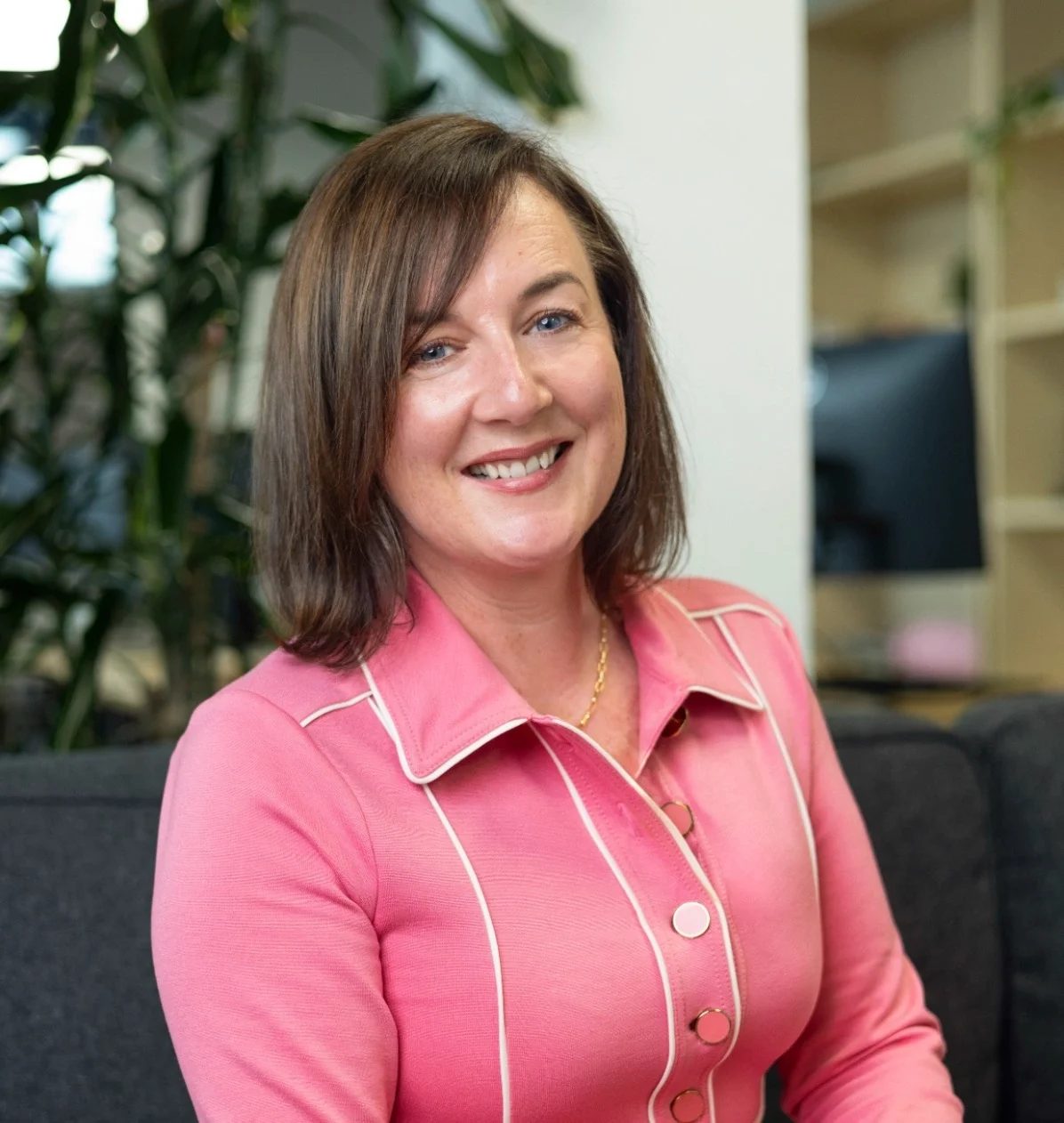

Entrepreneurship: 30 Years of Learning with Jenni Timony
Entrepreneurs struggle to find the balance between aggressive business growth and their own essential wellbeing, often overlooking the psychological health of their teams. This challenge can lead to burnout, poor decision-making, and limits on long-term, sustainable success.
This episode explores the strategies that prove compassion and a focus on human performance are not luxuries, but commercial necessities for building an enduring enterprise. You will hear key learnings from 30 years of entrepreneurship, the power of delegation, and innovative ways to listen to your customer to shape and expand your business.
Our guest is Jenni Timony, founder of the hugely successful Irish athleisure brand FitPink Fitness. She is also the Managing Director for I Am Here, leading the movement for psychological safety in the workplace. Jenni shares her diverse experience, from starting her first business at 19 to becoming a national finalist in the EY Entrepreneur of the Year Awards.
THINGS WE SPOKE ABOUT
- Starting an entrepreneurial career young
- Key financial lessons from business failure
- Launching an athleisure brand successfully
- How crowdfunding provides fast investment
- The essential nature of true delegation
GUEST DETAILS
Jenni Timony is an entrepreneur with 30 years’ experience in commercial and social entrepreneurship projects. As Managing Director for I Am Here in the UK and Ireland, she partners with employers across sectors to embed psychological safety and build cultures where wellbeing and performance go hand in hand. She is also the founder of FitPink, an athleisure brand for women. Jenni has lectured extensively in Digital Marketing and was a national finalist in the EY Entrepreneur of the Year Awards in 2007.
Connect with Jenni:
Website: https://iamheretribe.com/
Social Media: https://www.linkedin.com/in/jennitimony/
PODCAST TRANSCRIPTION
For your convenience, we include an automated AI transcription.
Jenni Timony 0:00: I’m a big believer in, I suppose, innovation. And you know, we can’t innovate and we can’t be creative if we don’t make mistakes. So I make mistakes, ultimately my team will make mistakes. And you know, they need to know that it’s okay to make mistakes, because if you’re not making mistakes, you’re not trying hard enough.
DustPod 0:15: No unicorns, no brands, just hard working people who built their business from the ground up, sharing their experience so others can learn. Presented by Larissa Feeney from Kinore. This is Real Business Conversations.
Larissa Feeney 0:34: On real business conversations today, we are tackling the balancing act between aggressive growth and essential well being our guest, Jenny timminy is the founder of the hugely successful Irish athleisure brand FitPink Fitness. Crucially, she’s also the managing director for I Am Here leading the movement for psychological safety in the workplace with a unique perspective on scaling a major brand while prioritising human performance. Jenny is here to share the strategies that prove compassion is, in fact, a commercial necessity. It’s a pleasure to welcome the founder of FitPink and MD of I Am Here. Jenny. Timony, Hi, Jenny, you’re very welcome.
Jenni Timony 1:10: Hello, Larissa, thanks for having me, so, yeah, wow.
Larissa Feeney 1:31: Okay, so will you take us right back to the beginning and maybe tell me how you started as an entrepreneur.
Jenni Timony 1:39: Born in Ireland. Irish parents grew up in Australia. Though my parents immigrated to Australia in the 80s, did my high school education in Australia, but didn’t really settle. Just couldn’t wait to get back to Ireland. So came back to Ireland after I finished high school and intended to study either business or medicine, but I wasn’t able to get into university at that stage because I didn’t recognise the Australian school results, so I was looking around, what am I going to do with myself?
And I thought I’d start a business. So in my naive 18 year old head, I thought starting a business was an easy option, which we all know that it’s not. But yeah, I just got a small credit union loan and opened a little cafe on the Killybegs road out of Donegal town, and you were able to learn to just ate there. Actually, I’m nearly 19 at that stage, but that was my, my first real foray into entrepreneurship. And really, I suppose you know, it was a learning experience from day one. And it’s, it’s, I haven’t wanted to do anything else ever since then. I’ve always wanted to be an entrepreneur and to start things.
Larissa Feeney 2:40: So you started your first business when you were 18 and almost 19, and that was a cafe. So that was on hospitality. It’s very different to the industry you’re in today. Absolutely. Yeah, so talk us through that journey. Well, from the cafe, I noticed that there was a gap in the market for pre packed sandwiches, so it occurred to me that the only products you would see, you know, P packed were kind of late night, last last option and a petrol station. So I figured, you know, there must be a way to do that better and to put out a better quality offering for consumers. And the whole trend around dashboard dining and convenience food is really only starting to emerge around there. So I thought I would start it a pre pack sandwich brand.
So I did that, and that kind of became more about food production, really, rather than hospitality. So, you know, that that’s that really kind of grew quite significantly over the next number of years. We started a, you know, a designated food production unit that was fully kitted out, and, you know, HSC approved. And we really started to try to scale that business from, you know, from a couple of shops that we supplied in and around Donegal town to Sligo, then to Galway, and then we just kept trying to develop it. So down to Dublin. Then, you know, further on down, wow, Killarney.
And so this is what, late 90s, early 2000s is it or? Yeah, late 90s into the 2000s Yeah. So it was kind of the Celtic Tiger was roaring at that point. And yeah. So you were, you had identified this gap of workers on the go that needed something to eat. And you, as you said, good quality product. There was none, or very few of them, yeah. And there was a gap in the market for you. So you ended up supplying most of the island of Ireland, is that, right? You did, yeah. So we were supplying, you know, by the end we were, we were supplying the Topaz energy, which is now Circle K. They were 65 stores nationwide, with the contract for Aldi Ireland, which is about 70 stores at the time, aw, G, spa, hospitals, universities, independence.
So, yeah, it was, it was really once, once people saw the difference in quality of the product. And, you know, people would give us a trial, and they would a few sandwiches on the shelf, and customers, we come back looking for more. So it’s, it took off from there. This was you. I mean, you were in your 20s. That’s right, yeah, three children in my 20s. My daughters were born. Oh, my God, dad.
Years? Yeah, this was all at the same time. And did you have any, like, I don’t know, background in entrepreneurship in the family was the business owners in the family there?
Jenni Timony 5:09: Yeah, there was, there still is on my dad’s side of the family. There are my uncles, my aunt, AB noodles and estate agents. My uncles, yes, are in retail, and one’s in boat training and maritime training skills. So, yeah, there’s quite a lot in my family background, yeah, because I have none whatsoever.
Larissa Feeney 5:26: So that’s I’m just interested in, like, that’s on, yeah, isn’t it? That entrepreneurial streak is in your genes, essentially, it seems to me, yeah, absolutely. Yeah, yeah. Wow. So that those 10 years or so of your 20s must have been a manic time for you.
Jenni Timony 5:44: It was, it was crazy. And I think, you know, you look back on those times as a 50 of 51 today, times. And I think I couldn’t have done it now, or I couldn’t have done it in my late 40s. You know, it’s, it was the energy of youth, I think, yeah, drove me on.
Larissa Feeney 6:00: And probably naivety as well. You know, you don’t know what you don’t know. Yeah.
Jenni Timony 6:04: Yeah, exactly, yeah. And I think people say to me, oh, you know, you’re so brave to start a business, but I don’t think it was brave at all. I think when you’re when you have nothing to compare it to. So I didn’t have a career yet in corporate or anything like that. So it’s not that I was giving up a big paycheck to start my own thing that I think is brave. That is really brave. But, you know, I have nothing to lose, or it was just around with it.
Larissa Feeney 6:26: That was the sentence, actually, that was in my head. There, you had nothing to lose. So it was all it was just going to you were just going to build something, and you’re right, if you have an established lifestyle or career, to move away from that completely and start something new. That is brave. But, I mean, I wouldn’t take away from the bravery element at the same time, because it wasn’t the safe path.
I mean, if you think about the cafe moving to the size of organisation that you built over those years, that was massively challenging for any individual. I mean, you were criss crossing the country because you were travelling a lot during those years. You were raised in a small family as well. How was that business financed? If I heard you cracking you built a facility in Donegal town. How did you was that financed? Your banks? Or how did that work?
Jenni Timony 7:10: Yeah, so again, in my in my 20s, I didn’t have the experience to really plan these things. I mean, I think with a lot of entrepreneurs, a lot of these things aren’t plans written down. Your business plan is almost out of date the day it’s printed. It’s such an iterative process, and it doesn’t go in a straight line, as you know, but it’s finance. Was just, you know, cash flow, really. So it was, I think, a mistake, if I look back and I take a learning from it, is I would have probably capitalised the business better from an earlier stage. I would have got investors.
And I would have had investment there in the in the accounts to be able to bring on your customers, I suppose. So I would have seen, okay, we’ve got a new customer. That’s fantastic. And I would have seen the revenue in my head, but I wouldn’t have allowed for the fact that you need to put a van on the road 30 days before you get paid. You need a driver, you need more people in production, and all of those costs are hitting you straight away, but you don’t get paid for 30 days. So I didn’t even consider that. I just kept, you know, financing from bank loans, credit union, overdraft, anything I could get my hands on. So it was a piecemeal kind of a That’s very normal, though, I think wasn’t it for early stage business, as you say, you know, the business plan is at a date straight away, and you just, you find the money, you do what needs to be done, just to continue to build it.
Larissa Feeney 8:13: You know, that’s that’s very normal. What? Yeah, that’s the reality. So tell us about the main learnings then from that particular business that you took on, because I know you’ve gone on to to build more. What did you learn there?
Jenni Timony 8:37: So that business went into liquidation in 2008 so I learned from that a lot. I learned, really, that you need to look very carefully at the business model that you’re planning to go into the industry you’re going into. So while I looked at the industry, and I saw growth, and I saw, this is just the start of convenience food. This is going to grow. And I was right. I didn’t really look at the business model. And the business model was short shelf life, food, high labour cost, high capital cost, and a three day shelf life.
So you’re dealing with product that you have to sell, get to your furthest customer and sell within three days. So all of those costs you made it, made it a low margin business and a very capital and labour intensive business. So that’s where I didn’t look at so my kind of learning from that was to really look at your your business model before you you start something. Secondly, too, I probably invested all of myself, on a personal level, into that business ahead of pretty much everything in my life and when it’s when it ended.
It was a shock to the system, to say the least, but that made me realise that, you know, certainly, you need that drive and passion for your business, but I would say, don’t be in love with your business, because your business isn’t going to love you back when you’re 80. Yeah, exactly. So, you know, while I’ve gone into business since, I’ve gotten much better at having a life balance, a bit of life balance, and to be more present, yeah, with my family. So, yeah, that’s another big deal.
Larissa Feeney 9:56: I think that’s Look, I don’t know any business owners. Doesn’t learn that lesson somewhere along the way, that emotional attachment to your business is, well, it’s very real, isn’t it, in the early years especially, I mean, it’s because you grow it from nothing. I mean, you grew it from nothing, yeah.
So it’s very, very normal. It’s just, I don’t think your experience is unusual either, where it takes a shock sometimes to actually realise that and to and to make real changes. You know, which, which, which is a shame. So moving on, then to your next adventure after that business went into liquidation, 2008 was that whenever you went into the you we started work, doing a lot of work with startups. Is that right?
Jenni Timony 10:37: I did, yeah. So I did a marketing agency for a while, and I would have been working with startups through that, and then I got, as part of that, I would have been doing some training for new frontiers, which is the startup accelerator, and the role came up to manage New Frontiers in the northwest. So that was in it Sligo and it better Kenny.
So I did that for for a while, on and off, something I enjoyed enormously, working with other startups and getting views and insights into completely different industries from the ones that I would have been familiar with.
Larissa Feeney 11:07: You must have been able to teach those startups a lot, though.
Jenni Timony 11:10: Well, yeah, I suppose I would have been able to give them the benefit of my learning, yeah. And hopefully would have helped along the way. Yeah, absolutely, yeah. No, I’d say that. And then you went into another hugely competitive sector, into the at leisure sector, with, I think so, going from food like you’ve got, you know, they’re so different, aren’t they, but they’re equally as competitive, and maybe even more so, going from where you started with food or hospitality, and then into food production, and then into training and mentorship and marketing, and then into athleisure. What brought you there?
So it brought me there was, I was, I suppose I was looking around again, the bug. The bug never goes away. I think if you’re inclined towards entrepreneurship, and you know, I always look at the world with is there an opportunity or an idea in that? I had just had my fourth child, boy, who’s 10, actually next month, and get him back into my my exercise after six weeks, after having had him and bought, you know, Nike added us leggings. The big brands went out for a run. And firstly, they’d go pockets, which, as any mother of small children will know, you don’t go anywhere without your phone.
They just they sat low in my hip, which isn’t a tongue flattering on most 90% of bodies, but certainly not a postpartum one. So I just thought, This is crazy. This is, you know, fairly expensive money for something that’s not fit for purpose. So got me looking at the market, did a bit of research, realised that athleisure was the fastest growing category in clothing at that time, and that was well below before covid. Things really took off at leisure. But So yeah, I spent about two years over and back with suppliers trying to put together a basic range of leggings and T shirts. And succeeded in doing that, and launched in 2019 about six months before the pandemic.
Larissa Feeney 12:55: Wow. And if I remember correctly now today, every pair of leggings has pockets. Jenny, right? But if I remember correctly, the pink was, was it the first?
Jenni Timony 13:07: Oh, no, definitely not. No, not the first. Bigger brands than the more expensive. No, not the first. There were brands. There still are very expensive brands out there that are more than twice the price of of the pink leggings. But I suppose I wanted to get that quality and that, you know, functionality in a pair of leggings at mid at a mid price, so to make them affordable for people.
So you’re not just hoping to get one aspirational purchase of somebody, but you’re hoping to become that person will become a, you know, lifetime customer if you can sell them something that’s great quality, flattering fit and affordable above all else, and so you launched that six months before the pandemic started. So your timing for that particular sector was really, really good. Was it a challenge meeting demand over the pandemic? It’s funny, because I always say in business, it’s accommodation of luck and timing. And that was, I would say, probably the first time in my career that I got timing absolutely spot on. And that was getting that timing spot on was pure luck those years, or those couple of years of the pandemic.
Larissa Feeney 14:05: That’s all we wore. Was leggings and comfortable clothes. There must have been huge demand on the business at that time.
Jenni Timony 14:14: There was so again, the timing of that was quite good. So, you know, we had started to sell a few pieces at a time when we when we launched in July of 2019, and I was still working full time with new frontiers, so just packed those orders in the evening, and my husband would post it the next day. But I did have to take money out of the business. So everything that was coming into the business, I was reinvesting in stock, and I was almost stockpiling all of the stock. And people would say, you know, what are you buying? All this for? It’s not selling yet.
But I figured it just was going to take something. It could have been one influencer to, you know, talk about us, or something would happen, and all of a sudden we’d get a run of sales. And little did I know that something that would happen would be the pandemic. And, you know, demand would just go through the roof. And on top of that, we had a really good few months because other suppliers wouldn’t, weren’t carrying extra stock, because they might, yeah, stop piling stock. They weren’t ready, so they would have run out of stock, exactly, yeah, so they would have probably run out of stock quite early. And then, you know, suppliers weren’t, weren’t really shipping, because factories weren’t producing. So there was a period there of a few months where I had supply, I think, and a lot of other brands didn’t. So okay, certainly really helped accelerate us, okay? And that must have massively helped in terms of awareness as well.
Because while those brands had to step back, they couldn’t be promoting themselves with no stock, it did allowed you to step forward a little bit. That’s it, yeah. And I think the great thing, I mean, our customer base is, is obviously female only, and anywhere between kind of 25 and 65. 75 year old women. And the great thing I think about, about women is we tell each other when we find something we like, we tell each other and we trust each other’s recommendations. So, you know, I’ve always said that half of our marketing is, is, you know, Meta and Instagram ads, but the other half is, is definitely word of mouth. Yes, it’s very powerful.
Larissa Feeney 16:06: Yeah. And do you, I was going to ask you about marketing actually, because you mentioned, but you mentioned social media there, and you’ve also mentioned influencers. It is like that B to C sector that you’re in is massively crowded. How do you manage to stand out?
Jenni Timony 16:22: You’re absolutely right. It is very crowded market, and getting more competitive every year, with the sheen and Amazon and team, us to contend with how we stand out is, you know, I look at other competitors from time to time, but I really try not to too much, because I’m very keen that we we be our authentic selves, so we’re not trying to sort of copy anybody else. We just really want to be our own brand and be known for what we do best, which is, well, fishing consistently good product at an affordable price, and also the service end of it too.
So our customer service is exceptional. We make it our business to answer emails within minutes, if not hours of them coming in. Messages answer immediately. You know, if you order any weekday before 2pm you’ll have your product the next day. In most cases, returns and exchanges, we process them the same day we get them back. So unlike other big brands, you’re not waiting six weeks or four weeks for the money to get back into your account for a return.
So really, the service is something and customer service, you would probably know this yourself from from even from your own business, but I think it’s a key way for smaller businesses to differentiate. Is that that level of exceptional customer service, because it’s something that bigger brands just can’t seem to to replicate. For more layers there are in a large company, you know, there’s things take longer. It’s very difficult for us. Yeah, small businesses like ours are fleet of foot and nimble and able to respond quickly.
Larissa Feeney 17:48: And from marketing perspective, do you find that you have to continually change your marketing strategy to keep up with trends, you know, across different platforms, you know, understanding all of them, or have you settled on one or two of them? You know, how do you, how do you manage that element of the business?
Jenni Timony 18:07: So I suppose I we really look at where are our customers, and I think it starts with really knowing who your customer is. You know her profile of your customer, where she she looks online, you know what she does in her spare time, and really sticking close to that. And with every decision with marketing, such as a new platform or a new social media tool, it’s well, is our customer knowledge? Will our customer be there?
So, you know, we’re very slow to jump on to things that are trends, because we’re not a trend driven business. We never have been. We’re more about classics that last, you know, forever, rather than fad fashion fads, but it’s really going from where your customer is and where your customers like you to be. And, you know, take inspiration from and get ideas from, that’s where we want to be. So yeah, we have dabbled in a way we sometimes we dabbled in some social media platforms, but you get it, you get to know fairly quickly whether they work or not.
And my policy has always been to certainly try something on a small scale that doesn’t cost too much. And if you get, if you get good signals, by all means, keep kick on it. If you don’t cut it, cut it barely. Yeah. So we’ve kind of settled on, you know, two or three sort of channels and tactics that work for us, yeah. And our innovation around those is different approaches to those are looking for different audiences on those platforms, rather than anything way out there that we don’t think our customer will be on.
Larissa Feeney 19:30: Yeah, and you know your customer, Jenni, because you know you are your customer, essentially, you know you You’re, you’re women, as you say, between 25 and 65 or 75 and so you know where they are. You know what they’re interested in, you know what they’re looking for, you know what they’re talking about. So you’ve got a very well. And we ask, yeah, okay, okay, yeah,
Jenni Timony 19:47: we ask. So, so, you know, we send out emails every, you know, three or four days, kind of a marketing email. It comes from my email address, and people respond to it, and I get the email. So we’ll ask a lot of the time. You know what we pull up? Little poll on social media, and, you know, our next fleece is what colour this or that, and you’ll get a vote, and that’s, that’s the colour we will order. Okay, literally, we, we ask all the time, what, what do you want? What do you not want?
Larissa Feeney 20:10: Okay, so you’re listening to your customer, yeah, absolutely. And does your customer ever tell you anything that you were surprised to hear in terms of what they want, in terms of trends or, you know, yeah, yeah.
Jenni Timony 20:20: Yeah. So I suppose when you ask customers for opinions, you’ll hear a huge variety of different opinions and wants and needs, but you can’t, obviously act on everything. But what we do tend to see is when there’s a pattern, or when customers are lots of different customers are asking for for something in particular, yes, when we act. So an example that would have been different leg lengths. So our leggings and our come in two lengths now, and our straight leg trousers, which are like work trousers, but feel like activewear, they come in three lace and our flares and three less.
So that was something that came from mostly shorter women say, Oh, nothing that everything’s too long. Can you do a shorter one? So we did that. And then again, we have other customers that are tall and want a longer leg length. But then, then you’ll have some people asking for things that’s that are quite unique in terms of styles of leggings and prints and things. Yeah, that’s just to the majority, yeah.
Larissa Feeney 21:10: But isn’t social media the way you’re using social media, they’re really interesting because you’re using it to shape the business, essentially. And it’s a really, it’s a really interesting way of getting to know what the customer actually wants. We were never able to do that before social media, not really, not without having focus groups or, you know, formal ways of bringing customers together.
Jenni Timony 21:30: Exactly. Yeah, I think it’s and I think they’re even more, they’re they’re more an authentic response than a focus group, because they’re direct to you, and they’re not, you know, influenced by groupthink or by the loudest voice in the room. It’s just generally one on one from a single customer.
Larissa Feeney 21:46: And lots of people do, yeah, getting that insight into your customer in a, b to c is fascinating. So you have you stay really close to your customers. I mean, this is the question that I get asked all the time from startups. It’s around, okay, first of all, what social media platform should I be on? You’ve answered that right where your customers are. That’s that’s a great answer. What about the business owner? So you going on camera and talking to your customers? Do you do that? Are you comfortable doing that?
Jenni Timony 22:11: I do yeah. I avoided that for the first four years of the business. So I said from day one that I didn’t want to be the face of the brand. I’m not an influencer. I don’t have a huge profile on social media, so I wasn’t going to try and use that to grow a customer base and other influencers that have great followings. That’s that’s their strategy. But I thought I didn’t want, I wanted the brand to be a standalone brand on its own merit, rather than having the face behind it.
And that was fine when things were great, but then as things got challenging, as they always do, I thought, you know, what can I do differently? I always tried to think, you know, what got me here, won’t get me there, so you have got to change your approach to things, I think, in business, over time. And yeah, one of those things was social media. So I looked around and saw the likes of Amy Conley from sculpted by Amy on 24/7 herself, yeah, on her socials.
And I thought, well, if somebody like Amy is doing that, there’s a reason for that. She’s not doing that for chance. She knows that that’s what works. So from Ailey and lots of other female founders, I thought, well, that’s what I need to be doing, and put myself out there more. And, yeah, so last year started doing that. Still would say I’m not entirely comfortable with it. I just, you know, and I’m not, I’m not there yet. But the more you do it, I think the easier, I guess.
Larissa Feeney 23:31: Yeah, well, well done. Because a lot of female founders, and indeed, male founders tend to struggle with that element of it, you know. So it’s really, yeah, so you’ve made a decision. It obviously works. They’re doing it for a reason. They’re not doing it because they’re like, because they’re like, looking at themselves on camera, doing it because it works, and it works really well for them.
Jenni Timony 23:49: And we just have to do it, Grit your teeth and do it. But I think, too, that it’s another differentiator that large businesses and large brands can’t, true, can’t replicate, absolutely something that we can do. And people do business with with who they trust. They do business with people they trust, not nameless, faceless organisations so well.
Larissa Feeney 24:07: I mean, that’s why influence marketing has gotten so popular, because that’s the brand’s the larger brands way of trying to get closer to the customer and trying to use that, you know, know like and trust element, but you can’t, you can’t know like or trust a big brand, but you can know like and trust somebody on social media, who you follow anyway, whenever they use a big brand. So that’s their way of doing exactly what you’re doing yourself, obviously at much greater cost.
Jenni Timony 24:33: You know, yeah, absolutely, yeah.
Larissa Feeney 24:35
What is the one non negotiable metric that you track every day to ensure the success of fit pink, or is there one non negotiable metric?
Jenni Timony 24:44: No, there’s a few. I mean, first thing I look at in the morning, I get a report overnight of the website sales, obviously the sale, the top line sales figure I look at, and I have my kind of daily benchmark, weekly, monthly that we need to be hitting. So look at that, and look. Traffic to the website, just to see, is it up or down or the same? Yeah, really, just sales is the first thing I look at every morning, website traffic, conversion rate, obviously, for e commerce, website conversion rate is critical. It does vary.
You find that if you’re sending, spending a lot on driving traffic through, could be Google ads, could be meta or Instagram. You find you, you will see a decline in your conversion rate because you’re sending colder traffic, but ultimately you can be having more sales. So, so I don’t worry too much about that. Yeah, it’s just the cost of those sales.
Then you have to consider, you know, whenever you’re you’re being lucky like that from, you know, I know a lot of brands find that metas are really expensive, and doesn’t, you know, they can’t make a profit in their first order. It’s, it’s the lifetime value they’re hoping to make a profit on. Whereas we’re lucky in that we’ve been first order profitable through meta from the beginning. So even though costs of meta have increased, we’re still first time order profitable. So that’s, that’s, that’s very helpful.
Larissa Feeney 26:02: And there must be, I’m guessing, because of the brand loyalty that your customers have, and recurring element to the income too, which is fantastic.
Jenni Timony 26:09: There is, yeah, that, I suppose that there actually is. And the service element too, keeps people coming back. So we’re very lucky. We’ve got, we’ve got a lovely bunch of customers that are really fans.
Larissa Feeney 26:21: And the perfect pink, yeah, that’s, yeah, no. That’s really interesting. The website traffic, right? The Have you noticed that that has gotten more difficult? Like you said, you know about driving traffic to the site, right? You need people on the site because that’s where they buy.
And obviously after you have track conversion after that, have you found with the changes that Google has made over the last 12 months or 18 months, or maybe, maybe longer than that, there’s been changes to SEO. There’s been more of a shift towards Chat GPT, have you found challenges in that way? Or are you ahead of the curve there?
Jenni Timony 26:50: No, I don’t. We’re ahead of the curve. The SEO for our product is very, very, very hard because it’s so competitive. And you know, we’re competing with the likes of Lululemon, who has been in business for 30 plus years with their brand, then they’re one of the first to market with with yoga type products.
So I never really relied on SEO, because I know it’s, it’s so competitive, and it’s a long term strategy, rather than an immediate shot in the arm for sales. So you know, it doesn’t really matter. We’re still getting our traffic. You know, a lot of it comes from, as I said, paid efforts, and then a lot of it comes just direct to the website. So from what we can see, we think the direct to the website traffic is probably referrals. It’s people saying, check out this website. I got about pair laggings And those referrals and that traffic from from organic sources accounts for about 50% of our new customers.
Larissa Feeney 27:45: Yeah, okay, so, okay, so that’s positive. Do you have a team that manages this for you, Jenni, or do you do a lot of it yourself?
Jenni Timony 27:49: I do a lot of it myself, and we do have an external agency that manages our our ads, but we would do the creatives for the ads and feed them into this?
Larissa Feeney 28:01: Yeah, I find that whole area fascinating because, you know, we have seen challenges with website traffic over the last few months, and we actually had to do a complete redesign of the site as a result of it, because we were our site was built up, was built to answer particular questions that are now been answered by Google AI or by chat, GPT. So we had to, yeah, we had to. We had to rejigger off the challenge. Definitely, definitely.
Jenni Timony 28:27: And have you seen that taken an impact on your traffic since you’ve done the website redesign, we’ve seen massive increases since we did the redesign. Y
Larissa Feeney 28:32: Yeah, brilliant. Yeah, fantastic. Now we were also impacted by several, I’m going to say two or maybe three Google algorithm updates that were also impacted us, so we had a couple of knocks, and that way the redesign was done before. Well, at the end of the summer, the redesign was done, and yeah, we’ve seen big changes since then, and it’s because of the shift from SEO to Geo, or, I don’t even know the terminology myself, but it’s just the changes in our particular market. Yours is slightly different because it’s product. So people’s looking for a product, whereas for us, they’re look they’re not looking for a product, they’re looking for a service or information and answers.
Yeah, chat, GPT can provide that sometimes, and Google, AI is providing it as well. So whereas before the site might have, might, might have attracted a visitor to look at a blog, for example, and then that visitor might have gone on to be a client. That visitors not coming anymore because chat, GPT or Google AI is now answering the question for us. So, yeah. So it’s been it’s been interesting. It’s been interesting journey, and for you, so you are now, what? 2019, so you’re eight or so years, nine years into this journey at the moment.
Jenni Timony 29:46: What do we now? No, about six years into the journey?
Larissa Feeney 29:50: Okay? And what has the journey been like overall? So you’d really busy pandemic?
Jenni Timony 29:55: Yeah, it’s been, I think, quite unlike any startup. And trajectory I’ve experienced, or I’ve heard of other people experiencing. So, you know, you expect the kind of general hockey stick you start, then you take a dip, and then you go up and to the right. And ours was not like that. It started and went sharply up and to the right, literally in the space it went crazy. Yeah. And then come 22 and 23 it took a sharp decline. So people had probably overbought activewear during the pandemic, because you couldn’t buy anything else and you couldn’t do anything else.
So you weren’t buying new outfits for a wedding or holiday wear or or anything you were just buying at leisure. So when the world opened up again, not only were we competing with other clothing, but we were competing with everything for spend. So restaurants, again, your disposable spend might have been going on eating out instead of buying stuff. So yeah, 22 was was tough. I’d say 22, 23 were quite tough. They were tough years. But we iterated, we kind of iterated the product range. We sort of over since fan releases by 22 we’ve started to sort of move into products that aren’t necessarily pure exercise, where they’re kind of comfortable casual wear. So you started expanding the product range as such? Yeah, yeah.
So thoughtfully expanding so we still don’t want to be fast fashion, we don’t want to be everything to everyone, because we’ll never be able to do that. But really, you know, expanding where it makes sense. So we went into fleeces in 23 I think, and that gave us a huge lift. And then last year, we started doing our work trousers. So we do slim and straight leg work trousers that feel like active wear but you would wear with a pair of pumps or low heels and the blinds for work. And again, that’s been hugely successful for us too. Okay, wow. And I can, I can announce this here. Actually, I don’t tell anyone yet, but I’m sure that it’ll be a while before this is broadcast. So by the time this happens, this will be out there.
So we’re about to, we’ve actually just started to go into other brands as well. Okay, so fitpinkfitness.com will become fitpinkandco.com Oh, so again, going back to what our customer asks us, yeah, they’re always saying, you know, by things to go with the straight and straight leg trousers, you know, what? What could what tops can you get? Tops that will go with these? So we’re starting now to move into other brands that I’ve carefully selected and, you know, really looked into properly and spend time with, for, you know, casual, smart casual workwear and casual. So wow, that will complement our own leggings and our own products, and just gives people more variety options there and products that are are fit for everyday life, not really just for exercise or just for Saturday.
Larissa Feeney 32:34: Oh, that’s fascinating. Well, congratulations. First of all, is that going to be your own products that you’re selling on FitPink and CO or are you bringing other brands onto the site? Other brands?
Jenni Timony 32:40: Okay, so our own products are great, but it’s, you know, it’s a slow process to design something from scratch, source it, sample it, do all of that. And I want to be able to offer relatively regular new products that are well selected for for our customer base. So I thought we’d try some other brands here.
Larissa Feeney 32:40: So you’re going to be looking for brands, or maybe you’ve already sourced them that are that match you in terms of your values of sustainability, and, you know, move away from fast fashion as such.
Jenni Timony 32:40: Absolutely. So other brands that are like ourselves, good quality at a reasonable, affordable price, yeah, things that that you can wear for several seasons that aren’t too trend driven. So we’ll never do things that are a crazy colour, that are just spring 2026, and you’ll never wear them again. So we try to stick to things that are classic that you’ll you’ll wear year in your eyes. Well, congratulations. That will definitely be live, I’d say, by the time this podcast goes out. So we look forward to to to checking it out.
Then Jenni, whenever you said, at the start of the journey for FitPink, you really bootstrapped it right? You stockpiled the product, as you said, did you continue to do that right the way through the or have you continued to do that right the way through the journey? Or have you sought investors along the way? That’s very popular today. Yeah, we did a bit of crowdfunding. So we raised some investment in at the end of 21 we raised a small investment through crowdfunding, and that was great. We still have all of our investors from that, that fund are still on board and still very supportive. And other than that, yeah, we kind of bootstrapped.
We use some finance houses that are out there for, say, buying stock, you know, where you you borrow the money and you paid off out of your daily taking. Yes, yes, yes, yeah. Like invoice discounting, type Yeah. So we use some of those, yeah, kind of, yeah. So that’s, that’s quite a good tool for us when we’re looking for a lot of stock towards the end of the year for quarter four, which is always our best, course, yeah, and, but still, yeah. So we’re relatively, relatively bootstrapped, yet there isn’t a lot of money to throw around. It’s, you know, it’s, it needs to be carefully managed. Yeah.
Larissa Feeney 32:40: Can you talk to me about the crowdfunding? Because I think that’s really fascinating. I don’t think we’ve had anybody on the podcast before who has accessed funding in that way. And I think for those people that listen, or for those business owners that are listening to this, and.
Jenni Timony 35:00: Are looking at how to raise money. Crowdfunding is a viable option, one of many. Of course, what was your experience of it? Did you find it, as a business owner, easy to navigate? Was it worth doing? Yeah, it was definitely. The advantages of crowdfunding, I would say, are that it’s fast. So I think with regular venture funding or bank funding, you could be six months in the process, if not longer, of trying to raise private investment or venture funding. Crowdfunding takes about a month to prepare, to get all of your your due diligence, for them, to do all of their due diligence and prepare documentation, all of that.
And then the campaign goes live for a month to six weeks. And it’s very intense. So you’re, you know, you’re always reaching out to LinkedIn, you’re beating people. Then, you know, there’s a huge scramble. You know, you get a bump of investors early, then you get a kind of valley of death in the middle, where nobody’s looking at it. And then the last few days, again, it takes an uptick. Then it’s it’s done, including legals and everything else. You know, you’ll have your investment in the bank and in another 30 days. So you’re talking 90 days taps from start to finish.
So you know, you need to allow it the time to engage with that and do it and be there to talk to people. But yeah, it’s a relatively fast process, made easier by the nominee company. So rather than dealing with, I think there’s something like 60 plus investors in our investment from the crowd fund, we deal with one nominee company, okay, okay, that represents, represents those investors. And that being said, I still communicate to the investors directly with with a quarterly update. Okay, okay, but yeah, I would recommend it for certain businesses. Yeah, it worked for us. It was a good way to do it.
Larissa Feeney 36:38: Yeah, probably not for everybody, though. But then you know, investment isn’t for everybody, either. Some businesses, you know, different route. Thank you for bringing us through that. That’s really interesting. So not only are you busy with FitPink, because you are, you’ve now decided, or you have, you are now MD of I am here. So I’m really fascinated to hear about this position, because I haven’t spoken to you at all since, since you’ve taken this on.
Jenni Timony 37:05: So maybe you could tell us about how you ended up in that particular role I Am Here was, was founded by a good friend of mine called Jim Breen, who was also an EY Entrepreneur of the Year finalist in the same year as I was with Doolittles Back in 2007
really embed the courage, confidence and clear skills for everybody in the organisation, not necessarily just managers, but everybody in the organisation, to be able to recognise when a colleague might not be feeling okay, and ask the question, show you care and signpost them to help and support if needed. So you know what tends to happen?
Maybe it’s an Irish thing, but when you notice maybe a colleague is struggling, it might be, oh, I didn’t know what to say, or you lean out away from that, rather than, you know, leaning into it. So with I Am Here, team members know to this was just getting the skills and the confidence and the courage to lean into that conversation and be able to help, hopefully help a colleague. And we know that with our existing clients, what they see over time is not only does it impact help seeking and help offering behaviour, it also has an effect on the organisation, where disengagement is lower, so people are more engaged with their work, more engaged with their colleagues, and productivity is higher.
You know, leave for things like stress and mental health. Leave can be can be reduced by really teaching everybody in the organisations to look out for each other. So it’s more about collective responsibility for each other as human beings, rather than saying, Oh, well, that’s an HR problem. Or, you know, sort of, okay. You’re trained in Mental Health First Aid, you deal with that. So it’s a more long term culture driven, I suppose it’s about changing the culture, rather than, rather than a tick box exercise, to say, yes, you know, that person is trained in medical first aid, and it works very well. S
o it’s a fantastic product to to be leading and to be working with, particularly when I talk to clients that that have had I Am Here for the long term, and you hear stories, and you know a client is telling me last week that she had a guy that worked on a building site came to her and said that, because I am here, because of I am here, he gave up gambling, which had ruled his life for the last 10 years, and he said his marriage was was going from the brink of divorce to being all loved up again, and he’s he’s coaching his kids soccer team at the weekend for the for the first time in his life, he’s actually seen his kids at the.
Again as well. So for me, that’s that’s what it’s about, and that’s why I Am Here such a powerful, such a powerful initiative in companies, because it’s not just helping employees, it’s helping us as humans. It’s helping families. And the ripple effect it’s having into families and even communities is fantastic.
Larissa Feeney 40:19: So what is it, then, for the company? Is it software, or is it training, or is it both?
Jenni Timony 40:25: It’s both. So we, I suppose we call it culture change. It’s a, you know, it’s a long term commitment from a company and from ourselves. So it’s not a one and done course or project. It’s a three year commitment. And the interesting thing is, three years sounds like a lot, but I think the vast majority of our clients have signed on for a second and third, three year terms. That really shows the impact it’s having, but it’s, you know, we certainly have a dashboard the arena where there’s a whole, whole range of different help and supports and numbers to call for different problems that need support, as well as reading materials and tools and other things.
But a lot of what we do is either virtual live or even face to face talks with teams, you know, on building sites, in offices, and to sort of re engage. Because we know that if you want to improve your physical health, you’re not going to do one hierox class and say you’re fit similar with our mental health. You know, we can’t expect to do a course and say that we’re all mentally well and fit. It’s a continuous process that needs to be repeated, and that sort of repetition and regular effort is what leads to culture change and what leads to teams really engaging with each other and supporting each other and being more cohesive and connected, which ultimately benefits the business?
Larissa Feeney 41:44: Yeah, no, absolutely, absolutely. And I can completely see, see why businesses would be signing up and will be interested in it. Is there any particular industries that you work with?
Jenni Timony 41:53: So we work with any industries where we currently have the most of our clients would be construction would be one in Australia, we have just signed a deal with Alliance insurance as their only mental health and well being provider in Australia, New Zealand, and they are looking to roll a site in their education clients and then their Department of Corrections clients. So, you know, really any high stress industrieswhere there’s, there’s there’s high stress, and there’s, you know, high demand on the people resource, which is almost every industry now, yeah, exactly what took you there, because you’re very busy anyway, and the business takes you, I’m sure a lot of your time it does, yeah, but I think, because I’ve been in I was involved with cycle again suicide.
I helped Jim with cycle against suicide back in 2012 so kind of what? Of watched it grow, and watch the impact it’s had. And then when Jim started, I am here, I was very much interested in how that was going to impact workplace well being, yeah, and it’s just something I’ve always been really interested in having, you know, worked with teams my whole life and employed lots of people. And yeah, so the role came up, Jim mentioned it in passing and and asked, would I be interested? And it was something I didn’t have to think a lot about, because it’s just something that that grabs me, and it’s something that really engages me.
Larissa Feeney 43:15: So I have two follow on questions right from from that, because to me, you’re now doing two full time roles, or maybe even more than that, because you’re a business owner, and that is always more than a full time role. So the first question I have is, how do you manage to split your time between the two? And the second question I have is, from a social media perspective, how do you manage to speak to your different audiences across the two businesses?
Jenni Timony 43:40: So I suppose the second question first, how we managed to speak to different audiences across the businesses and LinkedIn, at the moment, for me, is very much about I am here, okay, and so is a different platform, yeah, yeah, because that’s, that’s, that’s, it’s, it’s more natural. That’s where you know potential corporate clients would be, or existing corporate clients are. So that feels authentic and natural for me to talk about I am here on LinkedIn and then FitPink I when I’m on, if it’s Instagram or Facebook, that’s my FitPink hat. So, okay, it’s important to me that that I’m authentic about both. You know, I can’t be.
I don’t want to be inauthentic about anything. So, so far, that works, you know? I just, I just know when it’s, it’s Instagram and and Facebook, I have my, my FitPink hat on, and then LinkedIn is very much I Am Here. So, yeah, it works. I can’t imagine if it were both in the one platform. That might be a bit of a different, a different approach, but, but, you know, the approach and the style of what I post on LinkedIn is obviously quite different from from what’s on FitPink.
Larissa Feeney 44:40: And it reminds me of, you know, sometimes we work with businesses who have one business, and sometimes even one offering, but two different customers, a B to B and a B to C, and they would do exactly what you do. They would go to LinkedIn for B to B and to the other of the other social. Of platforms for B to C, and the product might be the same. In your case, it’s not, but the product might be the same, but their language is different, and how they post is different.
And even sometimes, what they talk about in terms of their value proposition might be slightly different, but there’s two very distinct audiences across those different platforms, even though, in a lot of cases they’re the same people, because you’re the same, there’s still people that are on LinkedIn, they’re also on Instagram.
Jenni Timony 45:29: That must be very hard. I would imagine that’s quite difficult today.
Larissa Feeney 45:32: Yeah, no, it is. But for you, you’re it’s very separate, isn’t it? It’s clearly two different businesses, two different markets, yeah, yeah.
Jenni Timony 45:39: I think I would find it more difficult if they were similar, yeah, that would probably be be a lot harder. But they are so different that it’s, yeah, it’s, it’s natural. It’s like talking about two different subjects, yeah, two different conversations. Yeah, of course. And you must be getting a very good reaction to the product that you’re working with with, I Am Here. I’m guessing on LinkedIn and and through your business connections, your own network?
Absolutely. Yeah. I think the responses is, you know, the impact it has on existing clients really is what I tell prospective clients about. And I think the fact that the vast majority of our clients after a three year contract have signed on again, yeah, I think that that’s, that’s six volumes, yeah, yeah.
Larissa Feeney 46:20: I love that three year commitment, by the way. I think that’s really, that’s really important, because I hate the one and done thing. I feel it, you know, even in this business, whenever we, you know, talk about working with the teams across various different areas, or whatever it is that we’re trying to do, it’s not a one course, and everybody knows what to do. It’s, you know, it’s, it has to be an ongoing commitment, especially in the area of mental health, because I mental health. Exactly, absolutely. Yeah. So back to the first question. Then, how do you manage to divide your time among the between the two?
Jenni Timony 46:50: I think it’s I have a great team in FitPink, so we’re not a big team, but we’re a very effective team. So very much about quality rather than quantity. And I think when I started with I Am Here, I really had to, to let go and to delegate properly for the first, probably the first time in my career. So, you know, up to now, I might have delegated some things, but not a lot, or kept an eye on this, or always, maybe micromanage would be the better word.
But when I Am Here came up, I knew I couldn’t do that. I had to. I had to absolutely hand things over and stick to it. And it was the best thing I ever did, absolutely the best thing I ever did. Me the team that I’ve handed over to, and are more than capable, and you know, if anything, their performance has improved because they’ve been given, truly given.
Larissa Feeney 47:40: You’ve got genuine responsibility now you’ve gone either way.
Jenni Timony 47:42: Yeah, exactly. Get out of your own way, you know, I’ve said that to people and and now I’ve, I’m looking at us, and I’ve had to do it myself. And, yeah, yeah, it was absolutely the right thing to do. So I’m still involved. But I would say, you know, that I Am Here gets the lion’s share of my time at the moment as it should, because I’m still learning about the product, and time here is helping, but, yeah, FitPink is always, I’m always there for content.
I do quite a few hours on a Saturday, and I’m always there to check in. So, yeah, but, but getting the business to the stage where you can do that, though, is a super achievement. So I mean, you have been able to build a team that’s able to run the business day to day, and you’re still there, and you still own the business, and you’re still obviously making the strategic decisions, but you’ve been able to step away, essentially, which I mean is what I think it’s, it’s, it’s, it’s, if anything, it’s to the betterment of the business.
So another thing that it’s helped me do, apart from truly delegate is actually think about the business more clearly. And it’s the whole thing about working on the business, not in the business, and being away from it. Now I see things a lot clearer, and then I just see that the proper vision and the bigger picture, rather than being stuck in the ways. So that’s leading to, I think, better quality decisions for me about the business too.
Larissa Feeney 49:01: Do you then have a cadence where you touch base with the team once a month or once a week so that you can, I suppose, still keep in touch with what’s going on there at a certain level that that’s, you know, appropriate for, for what you need to know in order to make those decisions.
Jenni Timony 49:15: That’s exactly it. Yeah, it’s just keeping in touch regularly, um, different times of the year, you know, at different times of the month, you’ll be in touch more other times things are are taken over nicely. So, yeah, and it’s always been there. And I suppose it’s showing my team that I’m not far away, and I’m always at the end of the phone, and don’t hesitate in asking, you know, and that’s, that’s, it works well.
Larissa Feeney 49:37: But at the same time, it’s showing them, I trust you to do your job. I trust you to grow the business. I trust you to make the right decisions. Yeah, which is really important as well for them, absolutely.
Jenni Timony 49:47: And you know, if a I’m a big believer in, I suppose innovation, and you know, we can’t innovate, and we can’t be creative if we don’t make mistakes. So I make mistakes. I’ve made 1000s of mistakes over. Course of my career, and ultimately my team will make mistakes. And you know, they need to know that it’s okay to make mistakes, because if you’re not making mistakes, you’re not trying hard, yeah, and you’re not trying to innovate or do things differently or better. So yeah.
Larissa Feeney 50:12: So here’s the question, okay, how did you get yourself to the place where you’re able to do that and do it as well as you’ve done it? A lot of business owners will say I can’t delegate, or they can’t do it as well as I do, or I can’t get good people. You know, there’s loads of stories that we tell ourselves. Jenny, how did you manage to put yourself in that position?
Jenni Timony 50:35: Firstly, I wanted to so like that. You know, I could have said six months before now that I can’t, or nobody can do it as well as me, or I have to be in the business, but I really wanted to get in load with I am here because it’s something I’m so passionate about. So I had to make it work. I had to to trust the team. I had to take a leap of faith in them. They’d take a leap of faith in me. And I just had to do it, because I really wanted to go ahead with I am here, so I was going to do it, and I just had to make it work. I think that’s probably the biggest motivator.
And the biggest way of making things happen is wanting to do something else enough. And I really did. So if I didn’t want it enough, or if something else hadn’t have come up, like I am here, that I was so passionate about, I may not have done it. I would have probably made those excuses like you’ve you’ve mentioned yeah as well, yeah, it’s a really good point. And, and I am lucky, you know, you’re absolutely right in terms of, you know, I know in some industries, it is very, very hard to get good people, and not just good people, good people who’ll stay with the organisation. So for me, I’m very lucky in that I have one or two very key people who who plan to stay. And I thought, if I don’t give them the responsibility, and if I don’t allow them to grow in the role, they’re not going to stay. So, yeah, you know they needed they needed it too.
Larissa Feeney 51:47: Yeah, I think you’ve touched on something really, that’s really valid there, and that’s you wanted to do something else to the point that you had to. The decision was made for you. You, you know, you wanted to do it. So you had to take care of this of the business. You had to make sure that other people were capable and able and willing and ready to do it, and you had to let them do it because you wanted to do this other thing so much, you know, it reminds me of a situation for a business owner, if there’s a health issue that comes up, you know, your health will always or if this, if an issue comes up with a family, I mean, that would always take precedence over the business.
So the business is only important to a point, right until there’s something else that is more important. It’s more important. Yeah, sometimes, yeah, exactly, Jenni, we are coming to the end. Now. I One final question. I’m really looking to understand what next. I mean, you’ve gone from like you started in hospitality, you went through food, you went through marketing, you went into startup mentorship and training into athleisure, and now you’re in the mental health space. What’s next for you? Where do you go from here?
Jenni Timony 52:51: Gosh, at the moment, it feels like the I’m here is obviously quite new to me. And I think the conversation in Ireland around the impact of mental health and well being on companies and on productivity is always starting. So I think I am here has a big future ahead of it, but it’s early in that conversation, and to sort of drag awareness and things so I can I can see me being involved, hopefully as the conversation opens up wider with I Am Here and with the pink having just about to start our new brands, and that’s a whole new strategy for the business, and dying to see what happens with that. Part of me is very nervous that I could, I could put up the stuff and get rotten tomatoes thrown at me and people telling me, what are you doing? This stuff so awful. But I’m excited.
Larissa Feeney 53:39: You know, that’s not gonna happen. You know that’s not gonna happen.
Jenni Timony 53:42: I hope not, but I’m excited for FitPink too, because it’s a different direction and it’s a new strategy. And you know, that’s what keeps me motivated, is trying new things and new strategies and iterating and always trying to do better than than we did last year. And like I said, what got me to here won’t get me to there. So I want to see now, does this get me to there? And it sounds like the way you’re talking, it’s almost like FitPink has been reinvigorated in some way by by the fact that you’ve taken up this other role. In I Am Here, you know the it’s got a like, almost like a new chapter now, a new strategy. Yeah, I like how you put that Larissa. So that’s that’s actually really true.
Larissa Feeney 54:21: Yeah, it is. That’s what it came across to me whenever you were talking. So Jenni looked the very best of luck with it. I hope you’ll come back and tell us how successful it has been, and I am here. Journey has been as well again soon, but in the meantime, Jenni, founder and of FitPink and Managing Director of I Am Here. Thank you very much for joining us.
Jenni Timony 54:39: Thanks for having me Larissa. I really enjoyed the chat.
DustPod 54:41: Thank you for listening to Real Business Conversations with Kinore. For more information on this episode, see the description area of this podcast or visit our website. Kinore.com Remember to press follow on your podcast player now so you’ll get a brand new episode every single month. This podcast is produced by dustpod.io for Kinore Finance and Business Services.