
Scaling a Specialist Service
Starting a specialist occupational health practice in regional Ireland rather than Dublin seems counterintuitive—but Dan MacCarthy proved it could work.
After experiencing burnout in pharmaceutical manufacturing, Dan co-founded MedWise with his wife in 2005, navigating startup challenges from zero customers to cash flow crises that nearly ended the business.
Discover how a 50% price increase lost zero clients, why engineering project management skills translate perfectly to business growth, and how twenty years of bootstrapping created a sustainable healthcare service company.
THINGS WE SPOKE ABOUT
- How travel health and mortgage medicals provided crucial cash flow during startup years
- Why implementing a 50% price increase resulted in zero customer losses
- How systemizing services helped escape monthly payroll stress
- How applying engineering project management skills created sustainable growth in the business.
- Why finding specialist occupational doctors remains the biggest constraint
GUEST DETAILS
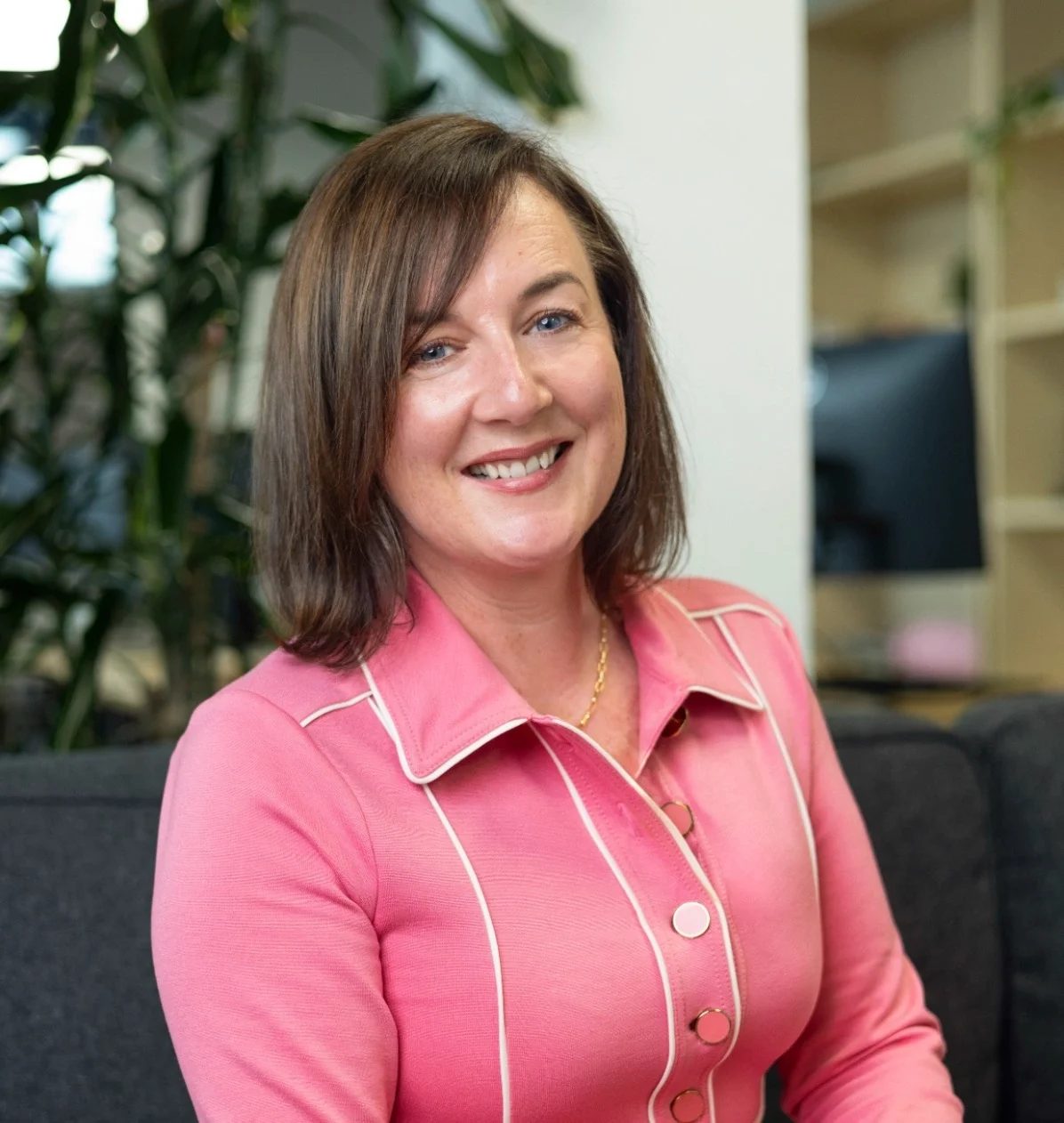
Dan MacCarthy is co-founder of MedWise Occupational Health Services, established in 2005 with his wife Dr. Deirdre MacCarthy. With over 20 years of technical experience in medical device manufacturing at companies including Boston Scientific and Pfizer, Dan transitioned from senior engineering roles to entrepreneurship. As employee number 74 at Boston Scientific’s Galway startup, he gained valuable scaling experience before co-founding MedWise as a regional specialist occupational health provider.
Dan applies his engineering background and project management expertise to business challenges, systematizing services and developing innovative solutions like mobile medical clinics for workforce-scale health surveillance. Under his leadership, MedWise has grown from a small regional practice to a 12-person team serving companies across Ireland, pioneering specialist occupational health services outside major cities.
Connect with Dan:
- Company: MedWise Occupational Health Services
- LinkedIn: https://www.linkedin.com/in/danmaccarthy/
PODCAST TRANSCRIPTION
Dan MacCarthy 0:01: To a young person starting off, doing a startup, either have the skills, learn the skills.
DustPod 0:12: No person has it all, no unicorns, no brands, just hard working people who built their business from the ground up, sharing their experience so others can learn. Presented by Larissa Feeney from Kinore. This is real business conversations.
Larissa Feeney 0:32: Hello. My name is Larissa Feeney, CEO and founder at Kinore Finance and Business Services. Today, we are meeting an entrepreneur who successfully transitioned from senior engineering at giants like Boston Scientific and Pfizer into essential occupational health services with over 20 years of technical experience, Dan MacCarthy, co founded MedWise occupational health services in 2005 We’ll hear how he managed their growth from startup to a substantial business, drove innovation and navigated complex compliance challenges while building meaningful relationships. It’s a pleasure to welcome the co founder of MedWise. Dan MacCarthy, Hi, Dan.
Dan MacCarthy 1:12: Hi Larissa, thanks for having me on.
Larissa Feeney 1:15: It’s lovely to have you Dan, and I’m really interested just to hear about the story of med wise, but first, maybe tell me, why did you leave engineering for occupational health back in 2005.
Dan MacCarthy 1:30: Well, I loved engineering. It just gave me so many challenges and opportunities to learn. I graduated in 1985 and I was lucky enough to get a job in a medical device company. And I stayed with that company for nine years, and I helped it grow, and I had a opportunity after nine years of moving to Galway and working for a new startup there called Boston Scientific Wow, and I was the 74 tire, right?
And it was pretty much the same deal transferring product lines back to Ireland, okay? I got married one morning, Deirdre told me that she wants to go on a four year specialist training course to become an occupational medical specialist. I was fine with that, and I got a job in Wyeth in their solid dose site. I worked there for two years, but I I had burnout, and I just felt I had to leave the company and just take a break. And Deirdre had finished her course, we just looked at each other and said, All right, what are we going to do now?
Larissa Feeney 3:02: So the timing worked out really well. Then, you know, Deirdre was finished her training, and you needed a break. So two heads came together, I suppose, and you guys came up with the idea of medways.
Dan MacCarthy 3:15: Will that be right? Yeah, I went back to do some project work in Galway on quality systems. I was working with an ex colleague of mine. We were going to do a medical device startup, and Deirdre wanted to establish a private medical clinic.
Larissa Feeney 3:32: So there was a possibility of you doing a startup as well as Yeah.
Dan MacCarthy 3:36: I advice, yeah. It was, I was, I was at crossroads. I backed all three options. I told Deirdre I establish a company for her. So the project was really Deirdre told me, I don’t want to work for anybody else. I want to work close to my children, and I want to set up an occupational health practice.
So she gave me the brief. When I worked on it as a project. In the meantime, I was working in Galway, and as a sideline, I was looking at the feasibility of setting up the medical device startup.
Larissa Feeney 4:13: And did that ever come to be?
Dan MacCarthy 4:14: No, it didn’t pass its feasibility. Thank God.
Larissa Feeney 4:19: I was going to say if you were suffering burnout before you started Medway, if you were doing two startups at the one time, you surely will be suffering burnout again.
Dan MacCarthy 4:30: Yeah, I think when I’m under stress, I tend to double down. And that would be a maladaptive coping mechanism, because I don’t think anyone could take that load.
Larissa Feeney 4:43: No, no, no. So you were given the brief, which is fantastic, because it sounds like Deirdre was very clear in what she wanted, and that was, I suppose, the founding spark for wed wise was her desire to work for herself, to set up an occupational health.
Of business, to be close to the children, maybe talk to me about the first year in particular, because making a decision to do it and actually doing it and making a success is a very different story. So how was the first year in business for you?
Dan MacCarthy 5:15: Yeah, it was great. We just lacked a few small things, like customers, the man, we had to figure out what services to offer. And how did you do that? Well, this is going back 20 years. The occupational health service sector was different.
Typically, if we were going to do this by the book Larissa, we would have set up in a city, okay, we’d be Dublin based. But as I said, one of the parameters of the briefing was we’d be close to home. So we set up a nice so straight away we were a regional player, and then we looked for our natural customer base, which would be small local companies.
Larissa Feeney 5:57: Yeah, yeah. At that time anyway, you were limited because of where you were based.
Dan MacCarthy 6:03: I think we would have ramped up a lot better and faster if we were city based. Yeah, that’s fair. So we made things difficult, yeah, but that was a choice. Yes, yes. At the time, the standard occupational health model was that local companies would have a company doctor, and the company doctor was usually general practice. There weren’t that many specialist occupational health service providers.
Larissa Feeney 6:31: Whenever you say that, Dan, do you mean there wasn’t any specialist occupational health doctors in the country or in your locality both.
Dan MacCarthy 6:42: Okay, there were specialist occupational health services in Dublin, cork Galway, you know, city based, I think we were about the first specialist occupational health provider in a regional area. And we started small. I started with two doctors, zero demand, two doctors, a premises. How did you fund it at that time, I guess we were lucky. Through all the moves, we managed to buy and sell houses while we were doing moves.
So thinking back, I believe it was self funded, yeah, because it was a shoe box. It was the least premises in town, yeah. So it was quite small. So I guess the funding would be the capital cost of kitting out that surgery Marisa. Then I just had to worry about the working capital having enough money to operate the business from a startup.
Larissa Feeney 7:41: And you said there was two doctors at that time, and they’re not cheap.
Dan MacCarthy 7:46: We started with two doctors, so straight away there was a high salary cost. Yeah, we needed to find customers. We needed to basically understand what services we were going to offer straight away. It seemed that the ramp up for pure occupational health would be slow, because we had to win customers one by one, and a lot of it was through word of mouth. So I needed to establish other services that would pay the rent and salaries. So we got into travel health.
Larissa Feeney 8:20: What is travel health? Is that with travel insurance or
Dan MacCarthy 8:24
no, no travel vaccines, this is going back to 2005 the Celtic Tiger was in. Yes, we were doing a lot of traveling, I suppose, weren’t we in 2000. Yeah, yeah. We’re going to Thailand, Vietnam, yeah, New York for the weekend, although we didn’t need vaccinations for that, maybe a tetanus job. Larissa so we, we were a franchise of the tropical medical Bureau, and used their model. Okay?
Larissa Feeney 8:57: So that got you at that time. That got you because I was going to ask you about your customers. And how you got your customers. So the the travel health product that would have got you customers like me, would it like one by one, or would it have been.
Dan MacCarthy 9:15: yeah, okay, it was B to C, yes, we were dealing with customers. We were dealing with the public. Yes, the traveling public, that isn’t what came to mind.
Larissa Feeney 9:21: Because whenever I hear occupational health, obviously I’m thinking, I’m thinking B to B, but so at that time, it was B to C, and do you still do that?
Dan MacCarthy 9:31: No, no.
Larissa Feeney 9:32: Okay, so that was very much. You were in a place. You were a startup. You needed customers. You need to generate cash flow. So it was something that offered you the opportunity to do that.
Dan MacCarthy 9:45: Yeah, it was something to pay the bills. We were still very clear in our mission statement, which was, we want to be a specialist occupational medical practice, yes, but in order to actually get there, you. We had to be a lot of different things to different customers. Yeah.
Larissa Feeney 10:05: So that’s very normal. You know, in the start, whenever business starts up, you’ll say yes to to anything.
Dan MacCarthy 10:11: Yes. Also back then, 20 years ago, 2005 there was a property boom, so we set up a revenue stream for mortgage medicals. So if someone is going for a mortgage, they need mortgage insurance on their life and health, and the mortgage company started to use us to do their their medicals.
Larissa Feeney 10:34: Okay, very good. So that was another little income stream that you were able to use, I suppose, until you got to your ultimate customer.
Dan MacCarthy 10:41: Yeah, so while you’re in the water, struggling, and you get thrown two life boys, you know, one of those was insurance, medicals, and one was travel health. So that bought us time. That really bought us time, because it took time and patience to build a portfolio of occupational health customers, company by company.
Larissa Feeney 11:04: Well, my assumption is that that process is quite long. You know, you’re really you’re looking for the sales cycle. Once you get them in the door of a company, it takes a long time to convert them to a client. How did you even get in the door, though, what was, how did you get your first company as a client?
Dan MacCarthy 11:25: Our first company, I think, was in the Kerry group. So one of their sites had a full time nurse, and they needed a doctor, occupational health, doctor, to visit their site, maybe once a week, maybe once every two weeks. So that was our first gig. Larry said, Very good. That’s a good one to get. Yeah, yeah. So we built up a portfolio, customer by customer over time, and it took several years.
Larissa Feeney 11:57: So that’s, I mean, that’s your B to B model, and I would imagine that once you manage to secure the customer, even though it took a long time, you’re probably likely to retain them.
Dan MacCarthy 12:06: It’s sticky, which is a double edged sword, so it’s hard to move a customer to us, but it’s also hard to lose a customer if we’re doing a reasonable job meeting their expectations.
Larissa Feeney 12:18: Yeah, yeah, no, absolutely. So it’s a great model once you get the customer, but getting the customers the challenge. So it took you several years to build up to a reasonable portfolio, and as you were doing that, you were supplementing your income with A, B to C model that was able to afford you the opportunity to build the business and to continue pay the salaries that had to be paid. Yeah.
Dan MacCarthy 12:40: So we grew. We very quickly outgrew our premises. So I guess we went from startup and then our biggest pain point was just space. We didn’t have enough space to operate out of because we started small. We started modest, but in the second year, I was looking around for a new premises, wow.
So we moved into 1000 square feet office space and fitted that out as a clinic. So I guess the first thing I did is I wrote a business plan. The business plan wasn’t really for the banks, it was for us.
Larissa Feeney 13:22: Okay, tell me about that.
Dan MacCarthy 13:25: Well, if we were to carry on as a business, we needed a bigger premises. It meant I we needed finance. So, okay, I had to write a business model or a business plan to share with the banks, and basically pitch for finance. So most banks said that’s fine, but you have to match the capital, so go 5050 on the venture.
We had someone to advise us on the business, and he told me afterwards he was giving us the last rights, because obviously he didn’t tell us we moved. We took on debt. I think shortly afterwards, we had the crash. So the phone stopped ringing. Larissa, the Irish traveling public, stopped traveling if there was no more jabs. People used to phone up and say, Are you the place to do the jobs?
Larissa Feeney 14:22: Okay, you were known. You were known. Yeah, yeah.
Dan MacCarthy 14:25: So we hit a slump in travel medicine. We hit a slump in the insurance medicals we were doing, but we had a base of Ock customers at that point.
Larissa Feeney 14:39: You were about. You must have been about six years or so into the business. So you’d had, yeah, you’d built up a reasonable portfolio of companies enough it still wasn’t critical mass, and our price point was low.
Dan MacCarthy 14:51: Yeah, we were basically converting to. Customers from their company doctor, which would typically be a general practice, to a specialist occupational health practice, yeah, but I couldn’t do that with the market fee for occupational medicine, where our for the standard fee? Okay?
It had to be priced down. Okay. We were doing okay, revenue wise, but turnover is vanity. Profit is sanity and cash is king. We were having a cash flow problem. We weren’t that profitable. So it was make or break.
Larissa Feeney 15:41: I think that’s very typical of again, startup phase. You know, your busy fools, yeah, and our product was priced to go, yeah.
Dan MacCarthy 15:49: I had to talk to our customer base, tell them we were increasing our fees. How did that go down, I figured we’d lose customers because there was a big jump. Yeah, I think myself and Deirdre were also taking some pain because our salaries were below market.
Larissa Feeney 16:11: Again, very normal.
Dan MacCarthy 16:15: We self sacrifice, yeah, and we were topping up with the company, paying us back the loan we gave the company, but I think we had to second mortgage the house to in order to get that money.
So we were running fast. We were busy fools, but we weren’t really making much forward progress as a family or as a business. So it was a crunch time. I thought it was a binary option, you know, shut it down. Our Yeah, our reset. So thankfully, as you said, occupational health, it’s very niche, and we’ve sticky customers. So our customers stayed with us, which I think is a testament to the value.
Larissa Feeney 17:01: Did you lose any?
Dan MacCarthy 17:03: I don’t think we lost one..
Larissa Feeney 17:05: I think that’s a great lesson. I think that’s a great lesson for business owners in general, because I see it all the time where business owners, particularly in service sector, are reluctant to put prices up, are reluctant to price properly in the first place, and then are reluctant to put prices up because they think they’re going to lose customers. So your experience was you didn’t lose one.
Dan MacCarthy 17:25: Yeah, I think I should write a book about how not to start the business.
Larissa Feeney 17:31: I think you made all the mistakes that we all make. So maybe you should, because then we can you pass on your learnings to the next generation. Can you give me any indication whenever you say you had to it was a big jump in terms of price increases. Was it like 20% 30% Do you remember?
Dan MacCarthy 17:47: On average, think it was 50% Larissa.
Larissa Feeney 17:48: Wow, So 50% price increase and you didn’t lose one customer.
Dan MacCarthy 17:57: I kind of like the drama of it. You know, it was Do or die, and that’s pretty much what I told the customer.
Larissa Feeney 18:03: That’s unbelievable, though. And does that make you think that you should have upped them by 60% or 70%?
Dan MacCarthy 18:10: Yeah, I’d often talk to this, and I have a simple model. It’s greed versus fear. The fear is we’d lose our customer, and then the greed is, don’t leave anything on the table. But yeah, you know, it wasn’t about maximizing profit. It was about keeping the company going.
Larissa Feeney 18:31: Yeah, which is fine whenever there’s a crisis, right? But keeping the company going isn’t a long term viable strategy for maximizing value within the company over the longer term. So it’s finding a crisis, and you got through it, and the company didn’t die, yeah? But then you went on to continue to build it over the next few years to where it is today. YEAH?
Dan MacCarthy 18:58: I I’m thinking back Larisa, I think the next pain point was cash flow, because my memory of of that time was just working really hard just to collect the money owed to us so I could meet salaries at month end. And it was a bit of a trudge for about two or three years.
Larissa Feeney 19:25: How did just on that point? Because I actually have it written down here. You know, the question in your business model, how do you bill like I’m guessing, because your customer is a company that you’re giving some type of credit.
Dan MacCarthy 19:37: Sure, standard terms, 30 days from invoice date.
Larissa Feeney 19:40: Okay, and you found yourself chasing that credit every month to get money and to pay salaries.
Dan MacCarthy 19:47: That’s my memory of the time was spreadsheets, phone calls, emails, collecting, checking the bank balance, making sure we’d meet the. Content requirements. So to me, I personally, I just label that the valley of death.
Larissa Feeney 20:05: So yes, oh no, I completely agree with you. I’ve been in that particular valley myself. How did you manage to get out of it? Though you’re not still in that place now, because you can’t do that level of stress over the longer term, you know, it doesn’t work. What changed?
Dan MacCarthy 20:19: We had a good quality service. We were growing. I mentioned earlier that our mission, our purpose, was to be a specialist occupational health clinic. So we were able to jettison travel medicine, the insurance medicals died because the market fell. So we were a pure play, occupational medical clinic. At last, we grew that business, I think, we grew the staff of doctors and nurses to meet the man.
We also launched a mobile medical clinic, okay? We bought a van and we custom built it to be soundproof so we were able to travel to factories around Ireland where there’s high noise levels and do the hearing checks on the workers without the customer having to send them away.
Larissa Feeney 21:12: And yeah, with no interruption to the customer’s productivity on a given day, or minimal interruption to the customer’s productivity on a given day, did you ring up the factories around the country, Dan and say, I have the service that I offer, we can come to you.
Dan MacCarthy 21:30: Oh, Larissa, I’m awfully passive. I didn’t I didn’t chase, right? I didn’t find my prospects. We had a good brochure style web page, because I think back then, everyone was on websites rather than Facebook or Twitter. And yeah, yeah, digital marketing was your website, so a simpler time, yeah.
So we basically opened our shop window and said, This is a service that we’re doing, and we waited for the customers to come to us. So thankfully, enough of them did. Wow, yeah, well, it’s, it was, it was good value to the customer because it minimized their cost and hassle. We systemized our service so that we were able to do the service at workforce scale.
Larissa Feeney 22:32: So I use my experience and skills as a manufacturing engineer to set up a system
that must have taken some investment, though, and it sounds like you have continuously, over the course of 20 years, continuously invested in the business, from new product lines to new staff to new premises, and then working your way through the recession and then to investing in a product line that’s a mobile product line, almost has that been a feature of the journey that investment?
Dan MacCarthy 22:54: Yeah, very much. So I’d like to say we were able to bootstrap and self fund, but at nearly every stage, we went out for finance on the back of a business plan. So I moved premises. I write a business plan, I set up a mobile medical unit. I wrote a business plan, same as what an engineer would do for a capital project.
Larissa Feeney 23:22: And do you? You said a little while ago that the business plan is not always for the bank, you know. So you’re doing a business plan because you need to raise finance, and that’s fine. Do you use it as part of your strategy planning anyway?
Dan MacCarthy 23:39: Yes, yeah, okay, the business plan is mostly for us. Yeah, yeah. I guess I just have a saying, you know, it’s ready, fire, aim, you know, without a plan, yeah, it’s easy to go astray. So the plan is our roadmap, plan to work and work the plan that was it, and that itself is excellent advice.
Larissa Feeney 24:02: As you always have a business plan on the go for a period of time, so you know exactly what you’re doing, exactly what the goal is, and you’re working towards that goal via the plan.
Dan MacCarthy 24:16: I think the way I’m wired, I I like to have goals. If I look at my CV, it’s, it’s just a list of projects. So, yeah, find, find what’s needed structured as a project, write a plan, execute. Yeah, yeah, I like it. And always be asking, what’s your biggest pain point? You know, and try and solve that.
Larissa Feeney 24:44: So always focus on the customer’s pain.
Dan MacCarthy 24:47: No, I’m talking about our pain, which is your pain. I’m a lot more sensitive in terms of loss papers. Well, we have to give them a service of that. Value? What’s of value to them? Yes, our customers are coming to us with pain points.
But I was really saying the business too is pain points at any time, it could be lack of space, could be lack of people, could be lack of demand. Yeah, at any given time, there’s always a pressing problem, so focus on it.
Larissa Feeney 25:20: Yeah, add your focus on it, or take the pain.
Larissa Feeney 25:26: We say that in this business, you know that if we identify there’s an issue, once we focus on it, sometimes there’s an issues, and we know there’s issues and but you know, we’re might be busy on other stuff, but if we focus on something, it’s much easier to resolve it, as long as it’s inside of your control.
Dan MacCarthy 25:43: You know, yeah, I think, I think a lot of this is in the subconscious. It kind of nags at you, and then there’s a trigger, or a critical point is reached, and then it becomes conscious, and then it it, it typically bothers me till I have a solution and can sort it out.
Larissa Feeney 26:07: Dan, that’s really fascinating, because you’ve essentially, you’ve essentially taken your engineer brain and applied it to business and where you identify and you work on every problem as a project, and you develop a plan and a goal, and you work your way through it, and that’s it.
That’s what business is actually a lot of the time. So where is the business today? After 20 years, it is 2020 years, isn’t it? Yeah, 2025, so 20 years since you set up the business. So it’s your 20th anniversary.
Dan MacCarthy 26:36: Year. 20th anniversary. We have survived 20 years.
Larissa Feeney 26:40: So congratulations on that. First of all, that’s no mean feat. Give us sense of the business today, the people that are working in it, and what’s the size of the business today, we have 12 people.
Dan MacCarthy 26:49: We’ve 12 staff, good, yeah, a lot of our staff are part time. Okay, we’ve always had a strong value for work life balance. And when we’re hiring people, we ask them what they want, what works for you? So quite a lot of our staff work part time, permanent staff, but part time, say three days a week or mornings only. Doesn’t matter, but I think giving people good work life balance at the start is good.
Larissa Feeney 27:22: Yeah, yeah. And definitely today, it’s valued, isn’t it? That work life balance and the flexibility that that allows so you have a team of 12 and your services is it’s all B to B. Now is that or is there any B to C? It’s all B to B, and how do you find that market today?
Dan MacCarthy 27:30: Oh, it’s good. I think if we’re clear about what we’re offering and try and understand our customers needs, it’s fine. A lot of our services would be standardized and systemized, and we’ve long standing customers who understand us and we understand them, so that’s fine. A lot of our growth is from small companies who will use us maybe once or maybe once a year.
So we have a system for kind of onboarding, once offs, one and dones. We have a very large basket of small customers. We’ve no one dominant customer which stabilizes demand. So it’s a plus not having too much reliance on a small number of large customers, or, even worse, one large customer, so we’re not a hostage to any one particular customer.
Larissa Feeney 28:54: Yeah, no, I would agree with that. And that’s the same in my industry as well. And I suppose in a lot of service sectors, if there’s reliance on one customer or client, well, you’re just very vulnerable. You know? Yes, yeah. So that’s that’s not ideal. So do you think that the business is in a much more stable place now than it would have been in the early days, or is it still growing strongly?
Dan MacCarthy 29:17: We’re not growing one of our biggest constraints would be finding and hiring specialist occupational doctors. They’re just not there.
Larissa Feeney 29:31: Yeah, and even the competition for them, I would imagine Dan would be, would be quite severe.
Dan MacCarthy 29:38: Yeah, at the very start, I mentioned the business was a structure built around Deirdre so she could practice. It’s pretty much the same deal when we grew the business. It’s just enlarging the structure so the doctors could carry on their practice. Yeah, and also bolting on. Non Doctor revenue streams, nurse led revenue streams, because it can’t be all on the doctor.
Larissa Feeney 30:06: Yeah, to be less reliant on the doctor, I suppose is Yeah, better for the business.
Dan MacCarthy 30:13: Yeah. Well, especially when doctors are scarce as hands teeth, it’s just difficult to find one and recruit one and keep one.
Larissa Feeney 30:23: So that’s your major limiting factor. And really, it’s really limiting the potential in terms of growth, because you can’t grow without the professionals. Yes, and you can’t get the professionals.
Dan MacCarthy 30:33: Well, our our main avenue of growth is choked for us, so I have to look at other avenues, other revenue streams, that don’t need a doctor. So we’ve done well with the mobile health surveillance unit. I looked at other possibilities. I think the next big project would be linked to our hearing tests. Okay?
So, like I said, we travel around Ireland, we visit factories, and we do audiology on site, at workforce scale, and we kept been asked about hearing plugs, those customized hearing plugs that you see the rock slingers wear, the ones that fit your ear. So, yeah, we looked into that, and we have a business plan. We have a partner company who 3d mold ear plugs and earplugs. And, yeah, we’re pretty much ready to launch, so it fits very well with the hearing the audiology business.
Larissa Feeney 31:52: So that’s the next business plan that has to be executed then, or the current one that’s in progress.
Dan MacCarthy 32:00: Yeah, we’ve done the business plan. We’ve partnered up with a company that has been manufacturing these custom fitted hearing plugs for 20 years. I think Ireland is a bit slow in adopting this, but I see Ireland as having like, there’s so much farm and medical device people here. So we’ve kind of looked at that market and said, Okay, let’s see if these guys would like to try out custom fitted hearing protection.
Because when I worked in pharma, when we had to go down to the processing areas, we were given these single use yellow squeezies that ear plugs we had to put in our ears. And those don’t always work very well, and they’re quite pricey because they’re single use. Yeah, I just thought that a fitted hearing plug, it would last longer, it will cost less over its total lifetime, and they’re easier to use, and there’s more comfort, yeah.
Larissa Feeney 33:09: And for you as a business, it’s getting you away from the reliance on doctors, and it’s diversifying a little bit away from the service element of what you do, because it’s much more product based.
Dan MacCarthy 33:19: Is it? It is, yeah, but that’s, that’s my home base. I like tangible products.
Larissa Feeney 33:24: I think it’s easier in many ways. There’s unique characteristics of a service business that make it difficult, and we’ve already spoke about one of them. For example, pricing too low. It’s very, very difficult to price too low with a product, because you’ve got a tangible product there that you know how much it costs. It’s slightly different whenever you’re selling a service. So from that aspect, you’re diversifying a little bit, which has to surely de risk the company as well, which is good.
Dan MacCarthy 33:49: Yeah, I just it just fits so well with our current service.
Larissa Feeney 33:55: Yeah, yeah, no, that’s fascinating, and so is the market for that product just Ireland then, or you’re just focusing on Ireland.
Dan MacCarthy 34:05: Our partner company is Belgium, and, okay, there’s several similar companies, and it’s, it’s quite a long established market. So, you know, BMW plants, Volvo plants. They’re all kitted out with these ear protection. So I think Ireland is just slow to change over to this new tech.
Larissa Feeney 34:35: Fascinating. Well, best of luck with that new product line. Dan, I have one more question for you. You’ve been in business with your wife for 20 years, and you’ve been through everything from cash flow issues to finance issues to Team issues to customer issues.
You’ve seen it all right, and you’re going to write a book which is good to know, so that’s one that I look forward to reading. But in the meantime, before the book gets written. And what’s the advice you would give to somebody who’s starting out in business today?
Dan MacCarthy 35:04: Oh, that’s a big question. I learned business by doing it’s kind of a chicken and egg situation. To a young person starting off doing a startup, either have the skills, learn the skills, or partner with someone who has no person has at all.
It’s very difficult to start up on your own, having the right people in the right roles, because a business can solve technical issues. We’ve a wealth of options for systems to run our businesses if you don’t have the right people doing the right roles, I think you’re building on foundations of sand. And every business is a people business.
Larissa Feeney 35:52: That is the truth, isn’t it that? I think that’s really solid, Sound Advice. Dan, thank you very much. Dan MacCarthy, co founder of midwives, occupational health services. Thank you for joining us today.
Dan MacCarthy 36:03: Thanks a pleasure. Larissa.
Voiceover 36:07: Thank you for listening to real business conversations with Kinore. For more information on this episode, see the description area of this podcast or visit our website. kinore.com Remember to press follow on your podcast player now so you’ll get a brand new episode every single month. This podcast is produced by dustpod.io for canoer Finance and Business Services.