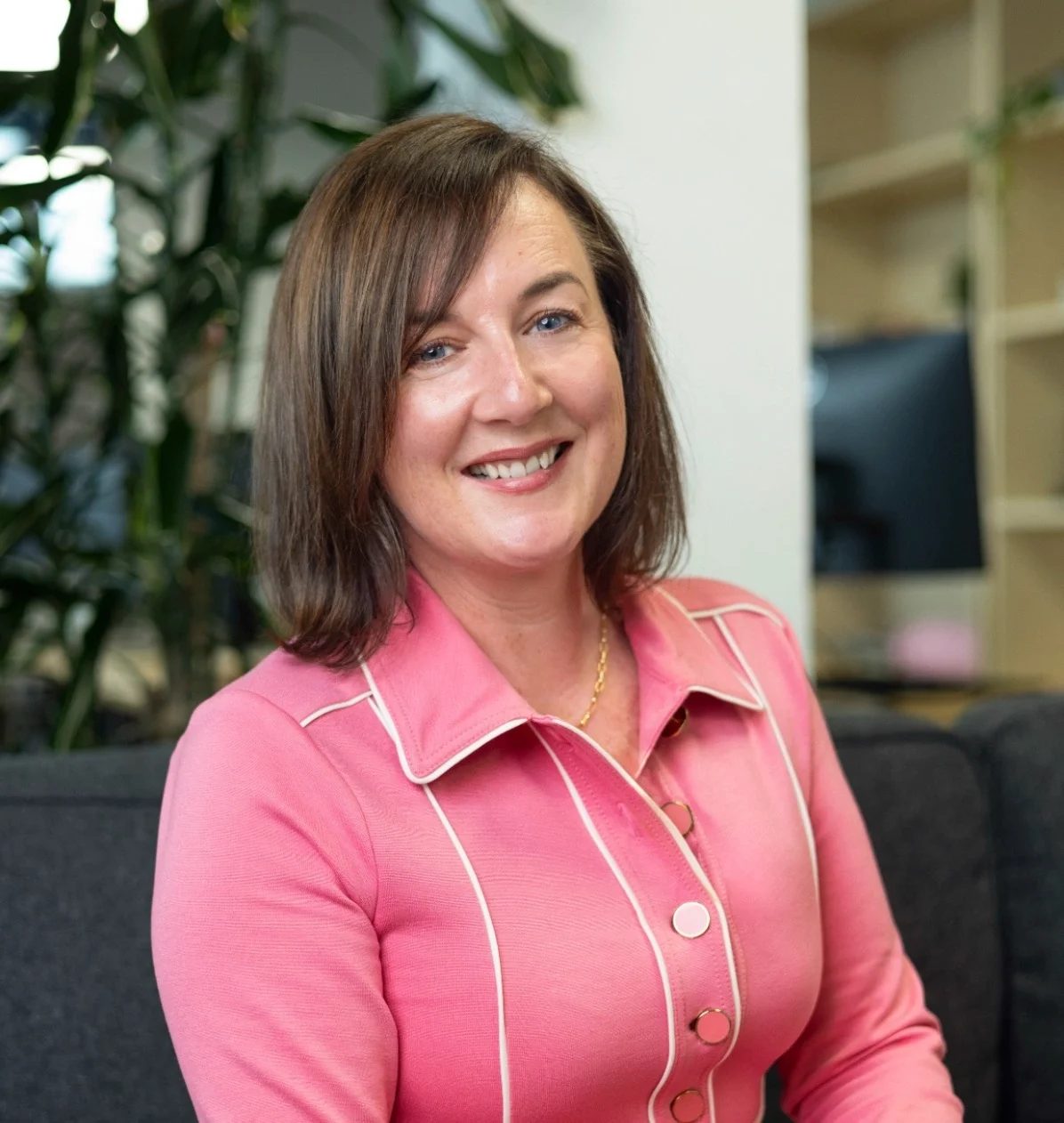

Scaling Without External Investment with Suzie O’Neill
The leap from a great product idea to a sustainable, self-funded, international business is a massive hurdle for entrepreneurs.
Scaling a brand while maintaining obsessive quality control and a digital-first approach requires discipline, intentional strategy, and a high tolerance for risk. This episode dives into the uncompromising philosophy of building a household name without external investment.
Larissa Feeney sits down with Suzie O’Neill, the visionary Founder and CEO of Ayu Cosmetics, an Irish-owned, multi-award-winning beauty brand. Suzie shares her journey from a technical expert to a CEO leading over 30 employees, detailing her masterclass in identifying market gaps and prioritising long-term integrity over rapid mass-market growth.
Things We Spoke About
- Leaving a secure job for necessity
- Bootstrapping business to avoid debt
- Why quality control beats launches
- Intentional DTC model for luxury
- Leader evolution: from tornado to CEO
Guest Details
Suzie O’Neill is the Founder and CEO of Ayu Cosmetics, an Irish-owned, multi-award-winning brand. A professional makeup artist by trade, she successfully scaled her business without external investment into a team of over 30 employees. Her business is built on a foundation of customer-centric innovation, brand integrity, and a meticulous direct-to-consumer strategy.
Connect with Suzie:
- Company Website – ayu.ie
- Social Media: https://www.linkedin.com/in/suzie-o-neill-ayu/
Podcast Transcription
For your convenience, we include an automated AI transcription.
Suzie O’Neill 0:00: I actually still have the very first order I got that wasn’t friends and family. I still have the postal order that was sent to me, just to show where it all began. You know, you don’t always have to have all the fancy stuff to begin with. I think just once you start, it goes from there.
DustPod 0:15: No unicorns, no brands, just hard working people who built their business from the ground up, sharing their experience so others can learn. Presented by Larissa Feeney from Kinore, this is real business conversations.
Larissa Feeney 0:34: Most entrepreneurs start with a passion, but they quickly hit a wall when the reality of scaling and operational complexity kicks in. It’s one thing to have a great product, but it is an entirely different challenge to build a sustainable, self funded engine that thrives in a hyper competitive global market. Our guest today is a founder who transitioned from a technical expert to a CEO, navigating the shift from a kitchen table startup to an international brand with over 30 employees, she has mastered the art of identifying market gaps, building a digital first brand without external investment, and scaling operations while maintaining obsessive quality control. It’s a pleasure to welcome the Founder and CEO of Ayu Cosmetics. Suzie O’Neill, hello.
Suzie O’Neill 1:18:Suzie, you’re welcome. Hello. Thank you so much for having me. Larissa, very excited to be here.
Larissa Feeney 1:26: Suzie, could you please give us a quick overview of the business and what makes it unique?
Speaker 1 1:31: So Ayu Cosmetics is a cosmetics brand that we have built to be your everyday essentials. So the products that you will always want to pick up, and that’ll make you feel great. Our market is predominantly 35 plus, so it’s market that I very passionate about, because I think women who are a little bit older can sometimes get forgotten. And I love lines, I love wrinkles, I love celebrating Women’s skin, and it’s women’s individuality, and it’s something I think that we do really well, and we’re very passionate
Larissa Feeney 2:03: about I don’t know much about your journey. I know that you taught, and I know you identified a gap in the market. So what was the gap that you identified?
Suzie O’Neill 2:12: I’ve been in the beauty industry nearly 25 years now, so it’s a long time, but before I started Ayu, I was teaching at a college, and at that stage, there wasn’t all the brands there is now, things weren’t as accessible, and I’ve always been a stickler with tools.
I always feel like tools are super important when it comes to your makeup. So the idea came about really because my students couldn’t afford all the big brands that were about, and initially I just started to look for really high quality tools for them that they could use in the college. But then they started to ask me, would they be able to get them for friends and for family? And just at that same time, I had had my first child, ollie, and the college that I was working in didn’t get any cover for me.
So when he was six weeks old, I was back in six days a week, and three of those days were 12 hour days, and I just thought to myself, I don’t want to do this. I’m not getting to see my brand new baby. You know, I wasn’t super happy, because I’m a bit of a control freak, and the way things have been run, if my name’s on something, it has to be at a certain standard. And I thought to myself, there might be just a gap in the market for me to go out of my own and start my little brush company.
Do you ever get the feeling that you just feel like there’s something more for you? And I just started on a little Facebook page with no website, and took orders through the messenger page on it, I actually still have the very first order I got that wasn’t friends and family. I still have the postal order that was sent to me. Yeah, I keep that as a keepsake, just to show where it all began.
You know, you don’t always have to have all the fancy stuff to begin with. I think just once you start, it goes from there. The bravery of that, though, you know, if you look back on it, how brave that was step away from, as you say, a secure role into nothing with no guarantees. Yeah, the risk was massive, wasn’t it? It really was, yeah, that’s why I sometimes think to myself, gosh, what was going through my mind at the time. But I think I was just so unhappy that anything would have been better.
And then I also think there’s an element of it had to work, yeah, I didn’t have a choice, you know. And I think sometimes, even with people who start businesses when they tend to have them as side hustles, I guess, or they have other guaranteed income, I think sometimes the same need for it to work and to keep going might not be there. So that was how it worked for me, is that I just didn’t have a choice otherwise, like, things had to work, yeah, or else I was going back to work.
Yeah? I remember the exact same feeling it was a necessity. It was survival. I mean, there was no alternative, right? Yeah, it was going to happen. So that was brushes.
And how did you manage to move into makeup? Then, I’ve always had a dream of having my whole makeup bag be my own. I never thought it would come true, but that was something I always used to think about. It took a couple of years for things to really kind of start to come together. But I started to do lessons at home. I built a little kind of show more thing at the side of the house.
Once I had kind of sewed enough brushes, I guess, to invest in it. But then people were starting to ask me, could I come to Claire and could I come to cork and Lim. Can? I thought, I can’t really do that for single classes. So I started to do group classes and master classes about the country.
At the time again, there was all these eyeshadow palettes that had like 28 and 48 colours. And women were just telling me constantly, it’s just too confusing. There’s too much in it. I don’t know what to use. So I wanted to create a really simple palette, a five colour palette that would suit all eye colour, skin tones, super easy to use, would bring you from day to night. And that was our signature palette. It was our first product. And I just thought, I can do this and make it easy for them.
And again, I wasn’t thinking on a big scale. I was more thinking that this would be great for the people who come to me for lessons, and the people who watch my little videos I was doing online. And so I went to Google, and I talked to a few different factories, manufacturers and things like that, and I got our signature palette made. And I promised Alan, my husband, when I was doing it, that I said I promised it was the only one I would do that year, because, again, I still didn’t have very much money. I was putting everything back into getting this palette made. But no sooner did that arrive, and I thought our radiance cream, I was like, there’s just one more product, and it was just one after the other time.
But we were so lucky that when the signature palette did launch, I had been using it online, that it sold really, really quickly. Like all of them, sold super quick. And I have a cool video at home of myself and Alan with the two kids, where they were super small, packing all the eyeshadow palettes into the envelopes and doing the labels and things like that. But that’s kind of how I got into doing the makeup. And still, to this day for me, it’s not about having loads of products. I just want to have the core products that if you were told tomorrow we’re going away for the weekend, you don’t have to think, this is what I need. It’s going to bring a day tonight. It’s not complicated. It’s easy. And you know, that’s when my ethos from day one, it’s not about having lots and lots of stuff. It’s just about having just about having really good essential pieces, the basics.
Larissa Feeney 6:44: Yeah, yeah, you certainly have achieved that, haven’t you? So you’ve mentioned there putting everything back in. I know that you haven’t taken external investment for startups. Was that an intentional decision? Suzie, from the very beginning, did you decide to bootstrap the business the whole way?
Suzie O’Neill 6:56: Yeah, to be honest, I never wanted to be in debt. I don’t like having debt. It’s possibly not the most intelligent way to do things sometimes that I don’t use all the cash we have, but I just feel like there’s not a huge mental risk if I’m just putting in what we have already. So everything that we make goes back in to do the next thing and the next thing, I should say never, say never, because you don’t know what’s around the corner if we want to scale is obviously cash flow is a big part of that, but I like also not having to answer to anybody else. We are very lucky here that we can make decisions and move quick and it’s all on us. So that’s obviously a big plus, too.
Larissa Feeney 7:34: Sounds like you did make that decision intentionally, and obviously there’s pros and cons to that decision. You know, as you say, taking on external investment has got advantages in some ways, because even keeping an eye on the cash flow all the time, that’s a job in itself, isn’t it? It’s almost like you need continuous financial monitoring just to stay on top of it all. Oh, yeah, whenever you’re reinvesting all of the time back into products, what was the most terrifying one you know, in terms of the riskiest one that you weren’t sure would work.
Suzie O’Neill 8:01: well, I mean, the very first product probably was because I put every penny into that, and so much so that I was so new to all of this at the start that I didn’t realise when the product came in, I’d have to pay customs and duty and fat and everything up front, and I didn’t have any money left for that. So I actually had to ask my sister for a loan, and and she gave me the loan to get the product in that was on the brushes, the initial brushes.
So that was probably my biggest day, but I spent 5000 that was everything I had at the time. I don’t even know how Alan, again, agreed that he’d let us put all our savings into it. He just has an unwavering belief that if I say I’m going to do something, that I’ll do it. But that was a big one, because I honestly thought when that bill came in for the VAT and everything. I was like, I don’t know. I don’t have any money to pay this. And I said to my sister, I was like, I can’t do this.
This is too difficult. I just remember her saying to me that day, you’re in business now, every day there’s going to be a bump on the road, and you just have to learn how to ride them. That is still something that every single day I say to myself, like, I just think it’s the only way you get through because, as you probably know yourself, every day there’s a fire you’re putting out. There’s something that’s going to come in front of you. And I think once you can mentally say, I know this is coming, it makes it easier then to kind of push through and go again.
Larissa Feeney 9:13: Isn’t that amazing advice to get so early on, though? Yeah, is she in business herself?
Suzie O’Neill 9:17: She does have her own business. Yeah, that’s amazing. She was working with my dad at the time. For her, it was an off the cuff remark, yes, it’s always something that stayed with me. And I, I say to so many people now as well, like, it’s just so true. It’s so true.
Larissa Feeney 9:29: I compared to having teenagers, I have three teenagers, you just don’t know what the next phone call is going to bring, either with the business or with the teenagers, you know. And that’s it’s just, you just don’t know anything can happen in a given day. And you just have to keep going.
Suzie O’Neill 9:41: Yeah, absolutely, yeah. You just don’t know.
Larissa Feeney 9:45: And on the subject of more products all of the time, so the bigger you get. How do you maintain that quality control at scale?
Suzie O’Neill 9:53: Well, like that, because we don’t have lots and lots of launches all the time. We’re slow to bring new products out because they take so long. Know, to produce and to be totally transparent with you, right? A couple of years ago, we had somebody in with us. I brought in to help me run the place, and they wanted to do lots of product very quickly for revenue purposes. And I suppose I let it happen at the time because I thought, okay, they know what they’re doing, but brought in a lot of product that really wasn’t to the core of what we are. And like, they sold grant, but they weren’t great, and so we discontinued them pretty much as soon as they had come in. And I was like, No. And ever since then, again, for me, it’s unless I’m using it every day or I want to use it every day. It doesn’t happen in here. So we’re not.
Our business doesn’t run on the next launch, the next launch, the next launch. It’s actually about, for us, cementing the quality of that product in a person’s hand, and then they just want to keep coming back for like. We’re so lucky. We have a returning customer rate of like in the high 80s most of the time, and that’s a testament to the product that they know we’re not just bringing it out to make more revenue. It’s actually we’re creating things we feel you really need and that are going to help your day to day.
Larissa Feeney 11:04: I constantly see new products been launched all the time, and I always wondered about that. I know the reasons why, obviously, but the pressure of constantly having to come up with something new, something revolutionary or innovative, has to be very, very difficult on a business owner. So you’ve taken a different path completely.
Suzie O’Neill 11:25
Then, yeah, I think, to be honest, we do things fairly the opposite to most people, a lot, because, like that. Again, we’ve continued mostly DTC, rather than going into mass market. And again, because for me, it’s not about money, like, obviously money is great and everything, but I think to myself. To me, it’s always something more. Like Ayu is about empowering women. It’s about making people feel great. It’s about educating people on the product they’re using. And for me, it’s about simplifying that whole thing as well.
Because again, through my years of doing lessons, people were so intimidated by beauty and skincare, because there’s just so much, and you don’t know what you’re meant to be using, and you’ve been marketed this, that and the other, whereas we kind of go the quite slow approach of like, No, you don’t need to have everything, but these are your core pieces, and this is going to really make a difference. And yes, it might make growth slower than some other businesses, but the way I see it is, in 20 years time, I want to be still here and still doing what we do, and feel like I’m doing a good job at that, rather than blast on the scene and do huge things now and then be obsolete in five years. And that sounds like, again, another intentional decision to protect the brand’s long term growth, almost, but also integrity.
Larissa Feeney 12:28: Yeah, you’re keeping it very, very small, or when you grow, it’ll be thought through, and it’ll be intentional, and you’ll know what you’re doing — that approach to scaling a specialist service is very different to what other companies would do in the industry, isn’t it?
Suzie O’Neill 12:47: I think so. Yeah, because, I mean, look, we’ve had many offers over the years to, you know, scale and be all over the place and all that, but it’s just not how I ever wanted to do things. I’ve come from the education background. I also know what it’s like to at different stages in your life where you might not feel your best, and we always want to have that connection with our customers, so it’s something that’s been really, really important to us, that we don’t lose that. And I feel again for us personally, if we were to go mass, we’d lose the connection that we worked so hard to get.
And I think people trust us because we’re not overtly selling to them also, I guess, like, even for me, was intentional not to have my name on the product, because at some point, you know, I may not want to be front and centre all the time anymore, but I want the brand to stand on its own and to mean something to somebody. So like, the Ayu product is going to mean something to you. Suzie O’Neill, like, who she that kind of thing, you know, the way I want them again in 20 years, 30 years, 40 years. I want the person to still love that product because they know how it makes them feel.
Larissa Feeney 13:48: And I would agree completely with that strategy. Actually, I think it’s very difficult if you put your name on a product at some point in the future, there’s a difficult decision to be made, you know, and history has certainly taught us that with other brands, other well known brands. I completely understand that decision. To me again, from the outset, looking in, you’ve had a very, very strong, successful online strategy over the years, and you are the face of the brand from that perspective, certainly from what I see, and you do it very, very well. And your core message is very clear.
I know that you have been in Kildare, I think, with a pop up in the past. I’m not too sure if you’re still there. And then I seen recent media attention around a launch in booths. So could you talk to us, maybe, about the online strategy first, and then the decision then to go into physical shops.
Suzie O’Neill 14:32: So online for us, again, I love it, because we have a direct relationship with our customer. Two years ago, now, a year and a half ago, we built a new warehouse, an office out in Clain, and so everything happens under the one roof. Here we fulfil package. Everything orders all under the one roof. And again, my little control freak nature, I love that, because we know how every package leaves this place to go to the customer, and how they’re going to open it. And. I love the fact that we have the girls here who, you know, they spend all day, every day, talking to the customers. We do online consultations. We’re in constant communication with our customers. And I love having that, you know, all of that, plus it means that if we want to do something different, we don’t have to ask anybody. We can just go ahead and do it, and, you know, treat the customers and do lots of surprises and whatnot. We did have a shop in Kildare, and we had one in Mahan as well. They were our own standalone shops, which I did love. They were great. But the problem was people wanted it. They wanted to get their hands on it a little bit easier. Something for me, I never wanted to be mass I never wanted to be in every shop that you come by.
And it just so happened that last year, Boots approached me and we had a conversation, and I thought that aligned really well with us, because it’s one retailer, but they have a large footprint in the country, so you could be much more accessible, but you’re still just aligning with one brand. I just love the fact that they’re so supportive of Irish brands. They’ve been so nice to work with. They gave us such a beautiful space in the premium beauty section, which was great because we can have one of our beauty consultants in there working with our customers, so we never lose that touch point either. It was a case of we listened to our customers. They asked us. They wanted us to be somewhere where they could touch it and feel it and and see it in store too. So it was just lovely. We were really lucky to get it. So one strategy almost compliments the other.
Larissa Feeney 16:23:Then in many ways, you know, the idea being that the customer sees you online potentially, and they want the look and feel, so they go into their local booth. Are they in all booth? Suzie? Or is it just select?
Suzie O’Neill 16:33: No. So we’ve just launched into Liffey Valley. So it’s a process to go about. So we’re hoping by the end of the year to have rolled out in a few more, and then so on and so forth. But it’s all new. Retail is so new to us. It’s crazy. It’s totally different online. Having solid retail accounting services in place has been really important through all of that.
Larissa Feeney 16:49: So lots of learnings going on because you cracked online, I suppose. And whenever I talk to new businesses, this is the area that they talk about a lot, especially in the accelerator programmes, they talk about the marketing element of direct to consumer business, how you have to be online, how, you know, ideally, it’s the founder that’s online, that’s doing the, you know, face to camera type of work. Did that come naturally to you? Suzie? You do it really, really well.
Suzie O’Neill 17:15: Oh, well, thank you. I don’t feel like I’m supernatural about it sometimes. But, yeah, it did, because I suppose I have been years doing videos, and for me, you know, it’s not about I never see it about me. I just see it about education. So I have no ego about myself. That’s why it doesn’t bother me to come on with no makeup on and show how rough I look first thing in the morning, because I just want to show you how my little bit of concealer can do this, and suddenly I can look super fresh again. So as long as I know somebody’s learning something and getting something out of it, I’m happy to do that. But do I think it’s fully necessary. I know a lot of people like to know about the founder and things like that. Now, they like to know who the brand is and what their ethos is. But I think when you have a great crew of people working with you too, you know they’re great ambassadors for the business as well.
Larissa Feeney 18:08: So it’s not just maybe one person kind of you know you’re leading the charge, but you have lots of people who are on the same page and even the support, if you do have a bigger team, the support of the schedule of videos, the content of videos, what to post, and when you know the setup for the videos, all of that is probably very helpful as you grow.
Suzie O’Neill 18:19: Oh, yeah, I love doing my videos like I love still to this day, nothing more than sitting down and doing my face and playing with makeup, but as the CEO as well, most of my days are actually stuck in numbers and emails and all the boring stuff. So it’s really brilliant to have a team who are able to help you and just guide you, sometimes into what people want to see and what they want you to fill them. Because I always say to people like, I’ve only got one face in the same certain amount you can do. But what we’ve started to do now is bring our community in, and we fill them here, and that’s lovely as well. It’s nice to have that, and it’s great for me as well, because then at least it takes me away from the computer for, yeah, a couple of hours at a time to probably do much more enjoyable work as well.
Larissa Feeney 19:00: Yes, definitely. Let’s talk about the boring CEO stuff for a moment — the company director responsibilities and all that. Then, if you don’t mind, you mentioned the facility in claim. So just to be clear, you create the product, you bring it in, you fulfil it, you package it, you distribute it yourselves. Is that right? Yeah. So that’s very different to another company who might have a distributor in Ireland. Why did you choose that path?
Suzie O’Neill 19:25: So we did work with a few fulfilment companies. And again, I suppose I keep going, I’ve taken such control for it’s a lot of self development kind of happening here, Self Realisation. But I just didn’t like how they were packaging things, and how things were going out, and how their customer service were dealing with our customers for Ayu as well. So we call ourselves mastige. So it’s not mass market prices and it’s not prestige prices. It’s somewhere nicely. And then when I created the brand first, also the thing was, I had no money. I was broke. A lot of my students had very little money. But it didn’t mean I didn’t like. Nice things. I still like nice things.
So for me, Ayu, I’ve always positioned it, and it’s look and feel, that it looks and feels luxury, but you don’t have to pay the luxury price tag. So when it came to us fulfilling and packaging it here, I always want the person to get it, and it’s almost like they’ve gotten a designer product, you know, that kind of way. So they get the same lovely luxury experience, but they don’t have to pay the same price tag, and you just couldn’t get that with the film of companies. They don’t care enough about your product, because you’re just one of many. So for me, it was about we care here. And you know, the girls in the warehouse are just incredible with how they package things up, and they’ve always got great ideas and feedback. And then I know the customer is really, really going to be happy with it. And then on the other side, the business side of things, obviously as well, it’s actually more economical for us to do it this way. It works out better business wise, financially, for us to have it all in house, than to have a third party logistics company that we have to pay storage in and have to pay per pick as well.
And also, you don’t have the same when you’re in a fulfilment company. You don’t have the same ability to to treat your customers like, say, if you want to put a free gift in, or you want to put some chocolates in, or we have little quote cards that we give out with all our orders, because I love a good quote, and you can’t just do that with a lot of companies. So there’s a lot more freedom we have here again.
Larissa Feeney 21:22: This is coming up a lot, I know, but it’s in a very intentional decision to do things a little bit differently. Then is probably the norm in the industry, even the investment in the facility in the first place, right? I mean, that must have been a huge decision for you at the time, massive, massive, but you know what?
Suzie O’Neill 21:41: It came from. I have worked in city centre. I’ve worked all over the place, and again, for me, I need things to fit in my lifestyle. So my family comes first. Always. I have two kids, and they are my most important thing in my whole world. So I don’t want to be travelling an hour, an hour and a half to work each day. I want to be close by. So my office is actually three minutes from my house, so I was able to build it here. And I looked for years I never, I didn’t think it was going to come through, because I I really wanted a certain size warehouse, I wanted offices, but I couldn’t find anywhere to rent. And then this place was a new development. It was going to be built, I could build it to my own spec. So I thought Absolutely, 100% it’s but so brave again, right?
Larissa Feeney 22:25: Because, like, you’re not thinking to yourself, God, what? I know you probably were thinking to yourself, What if it doesn’t work? But you know, you went and you did it anyway, and that’s a big undertaking to build something in your own land, beside your own house for your own business. So that’s again, your bravery is coming through very strongly.
Suzie O’Neill 22:42: Yeah, bravery, your stupidity. I don’t know, but yeah, no, it’s definitely braver. I do think to myself, no, look, it’s an investment, obviously, to have the building here as well. I long term, it’s nice thing to have. And I suppose, though, I think if you’re a business owner and you’re an entrepreneur, you don’t really think of the downside too much. You can’t, because if you’re kind of concentrating on what could go wrong, you wouldn’t do a lot of things, you know, you kind of have to just one thing Alan always says about me is that I’m a real quick decision maker. I’ll make a decision and move on.
That’s that, you know. And the decision you make is the right decision at the time. And you know, that’s it. And if you have to course correct at some point in the future, well, then you’ll do it at that time. Yeah, exactly. I always think, you know, what’s the worst is going to happen here? That’s the way I was, whatever. Always would approach things, because if you can be happy with the worst, then it’s okay.
Larissa Feeney 23:10: Yeah, 100% How do you or indeed, do you forecast? Do you budget? Do you look ahead in terms of numbers?
Suzie O’Neill 23:36: Yeah, we do. We obviously have forecasts, and we have targets that we have, and we want to reach in that. But funnily enough, I actually had a conversation with the team this morning to say, you know, our plans that we have in place right now, possibly will need to change or need to be put aside, because everything is so uncertain. Nobody knows what’s going to happen next. And what we did, even at the start of covid, was the way I saw it was, you just need to kind of strap in and say, right, we’re just going to take it day by day and see what happens and see what goes on. Because obviously, with everything that’s happening, regardless of rising costs for us within a business, people are obviously becoming much more aware of their spending.
And you know, you need to be aware that they might not be able to buy all the product they used to buy, or they might buy it as frequently as they used to buy. So for me anyway, this is just personally to our business, but is about protecting the business and making sure that if that happens, or if anything was to happen that interferes with our trading, that we can still sustain it. You know that we can get through the storm because, as with every business, every few years you’re going to have something that’s thrown your way that will kind of rock the business.
But I think once you have your solid foundations in place — and ask yourself is your <a href=”/target-page”>finance function built for change</a> — you should touch wood be okay. It literally was just a conversation this morning that we had that we were we possibly do need to re look at things and just maybe make a more. Conservative view on the year, to just survive rather than, perhaps, really thrive into the new year.
Larissa Feeney 25:06: And you’ve reminded me now of that period over the pandemic where, you know, we were doing, you know, re forecasts every couple of months almost, you know, where you were continually changing, I suppose, taking account what was going on the world. That conversation you had this morning with the team, though, that’s a conversation that’s you’re coming from a real place of leadership there.
You know you’re demonstrating leadership to the team, and it’s clear that you’ve got the experience that you’ve been through turbulence before in the business. Tell me about your journey as a leader. Suzie, how have you evolved? And how would you describe yourself as a leader today?
Suzie O’Neill 25:38: Oh, gosh, well, I’ve learned a lot over the years for sure. I mean, when you start out first, you’re only thinking of yourself really. And you know, I would have looked at myself a few years ago like a little tornado running through the place, because I had 700 ideas and I wanted them done yesterday all the time. And ideas could change day to day, but I actually have done a lot of work on myself and done a lot of learning over the last years to try and become a better leader. It’s been a real entrepreneurial mindset shift for me. Like I’m not a micro manager, so I do like to let people do their thing, and I like to give them the wherewithal to thrive in their departments. I don’t like to show too much panic, or I wouldn’t be as erratic now, I would say, and I would think that the guys would agree that I’m fairly level headed at this stage, that I don’t get too excited, or I don’t get too panicked about anything. Just kind of try and keep things moving along. And I always try and if I can, I suppose, encourage the team to do more, because I suppose we’re a predominantly female team here, and for there’s a lot of moms, so I try and facilitate with kids going to school, but I also want them to thrive, and I want them to become more and, you know, work their way up the ranks, if that’s what they want. You know that they can level up and do more within the business themselves. So I would think, you know, yeah, like, over the years, I would have tried to work on bringing that out in people.
Larissa Feeney 27:00: I guess, you know, and see, whenever you talk about the work that you’ve done on yourself over the years, what did that look like? What was that work?
Suzie O’Neill 27:08: Well, so many, many books, many, many podcasts. I have a mentor myself now. He has been invaluable to me for the last couple of years. Because, you know, nobody teaches you how to do this. Nobody taught me. I started at home, and then, like nobody taught you how to have a team and how to run a business. So I think by listening and learning from those around really, really helped. And obviously, I’m not perfect. I have still lots to learn and lots to do, but I’m always trying to educate myself, like my friends my family would always say that I do nothing else but that, because if you listen to a podcast or I’m reading a book, it’s generally about business. About business, you know. And there’s not really room for any, you know, fiction going on in my head.
Larissa Feeney 27:49: Everything surrounds about the business and and there’s so much great resources out there. Isn’t there too so many learn from you said that you have a personal mentor, which is fantastic. I’m a full believer in mentors and coaches. But do you bring any objective advisors into the business? Do you have a board of directors or an advisory board in any way?
Suzie O’Neill 28:06: I don’t know, but I do have a few advisors that I would go to, you know, to try and just get a bit of advice. My mentor actually said to me recently, I should have a board of directors. I should think about that now, but I don’t as yet. No, I took on a board of directors Suzie in 2021 I think it was probably a bit earlier than was strictly necessary, and I did it just to make sure that I was getting different perspectives, because you’re absolutely right in what you say.
You know, we’ve never done this before, and if you’ve never done anything before, you don’t know how to do it, right? Yeah. So surround yourself with people who have done it before. I have found it personally hugely beneficial, but it is an individual journey, isn’t it, and it depends on the stage of the company.
Larissa Feeney 28:21: Suzie, you’ve mentioned Alan several times. How important is support from a partner?
Suzie O’Neill 28:55: It’s so important. You need to be a team. You need to work together, and you need for us. It works great. Alan runs the warehouse, so we know everything that’s going on the business. You can talk to each other, you can share problems, and it’s really just nice to have that support network. We’re very good, as well as leaving work at work, so that’s nice too, but it is great because again, there’s going to be times where things are difficult and you need someone to lean on, and it’s nice that he’s there, because, you know, the closest person to you, you can be completely, fully honest with, and kind of, you know, give them all the truth.
Larissa Feeney 29:28: Obviously, he’s in the business, so he can give you his perspective. And it’s probably a different position than where you’re at, too. So that will probably lead to interesting conversations.
Suzie O’Neill 29:36: I’m sure, totally because our jobs are so different within here that I can give him kind of objective feedback on what he’s doing, and he can equally do it to me, because he’s seen it from the outside, so he can give that advice.
Larissa Feeney 29:47: Yeah, I have a very similar situation. Actually. My husband’s in the business as well, very different area, so I know exactly what you mean, and that different perspective, but similar in some ways, because you know they know the business, and they know the issues in the business. Can be really valuable. Yeah, absolutely. What are your future plans for Ayu? Where would you like to bring it? Or where would you like to see it in five or 10 years time?
Suzie O’Neill 30:08: I definitely would like to see it globally recognised within the next five to 10 years. I think we absolutely have the ability to do it, but I think we still have so much work to do in Ireland first that that’s where you could have asked me a year ago, and I could have been saying, the UK and America, we’re actually very lucky that we have quite a good customer base in the UK, just organically. But I think we still have to master the Irish market first fully and get much more known here before we think outside of the country.
But it’s definitely something I do see happening in time. I also truly, truly believe that the brand deserves to be huge, and I know the product is good enough. But here’s the thing, is that I don’t know whether it’ll be with me at the forefront or not, you know, because that’s a lot of time, a lot of commitment. It’s a lot of it’s a big, big change. And I think, as an entrepreneur or a business owner, though, you need to know when you are not the person to do that as well. Like, it’s very important to know what you’re good at and what you’re not. So, you know, there’s a remains to be seen. Who, who’s that person going to be?
Larissa Feeney 31:15: Well, I mean, what’s the saying you’ll either be a different person or it’ll be a different person. Yeah, that’s what has to happen, because you have to grow and evolve. Because the person who runs the company at 1 million, it’s not the same person that runs the company at 10 million, right? Yeah. So the person changes, or the person changes, yeah. And I think having the self awareness firstly, but also the advisors around you to tell you that you know, it’s time to move on — it’s all about growing beyond your comfort zone. But I suspect Suzie, you’ve a long way to go before you make that decision.
Suzie O’Neill 31:45: Absolutely and like, that’s the thing you see. I, as I said, I think the brand deserves it. I think it’s good enough to do it. I know where my strengths lie. I won’t be the woman to drive us globally. You know, I will be here working on products and creative but I think I would hold it back if I didn’t think of these things, but imagine even getting the company to the stage where you can make that decision to work on the bit that you love and that you can really be amazing at, and allow somebody else to do all the other stuff that you find not as interesting.
Larissa Feeney 32:02: Let’s call it, yeah.
Suzie O’Neill 32:21: I mean, that’d be great. But we did actually bring someone in to do that a year ago, and unfortunately, that didn’t pan out. Because, again, it’s all about the right fit and the people who align with the brand and who will drive it in the right direction. I would look at it that you would have to be, it’s like marrying that person. You have to be, you know, a team and ready to go forward, and they have to really believe, I always say, in the business as well, like we’ve had a few different people come through, but if you don’t fully believe in what we’re doing and who we’re talking to, then it’s we’re not the right place for you.
So there’s lots to be done. I’m just happy as we are, to be honest, I think we have a really nice team. We have a lovely business, lovely customers, and I get myself lucky every day that we get to do this. And so that’s probably as well. It’s a nice position to be in, because I’m not running towards, you know, this massive thing straight away. I’m kind of just being present where we are and just enjoying it, I guess, absolutely.
Larissa Feeney 33:17: Suzie O’Neill, CEO of Ayu Cosmetics, thank you for sharing your journey and your insights with us. Thank you so much.
DustPod 33:23:Thank you for listening to Real Business Conversations with Kinore. For more information on this episode, see the description area of this podcast or visit the Kinore accountants website.